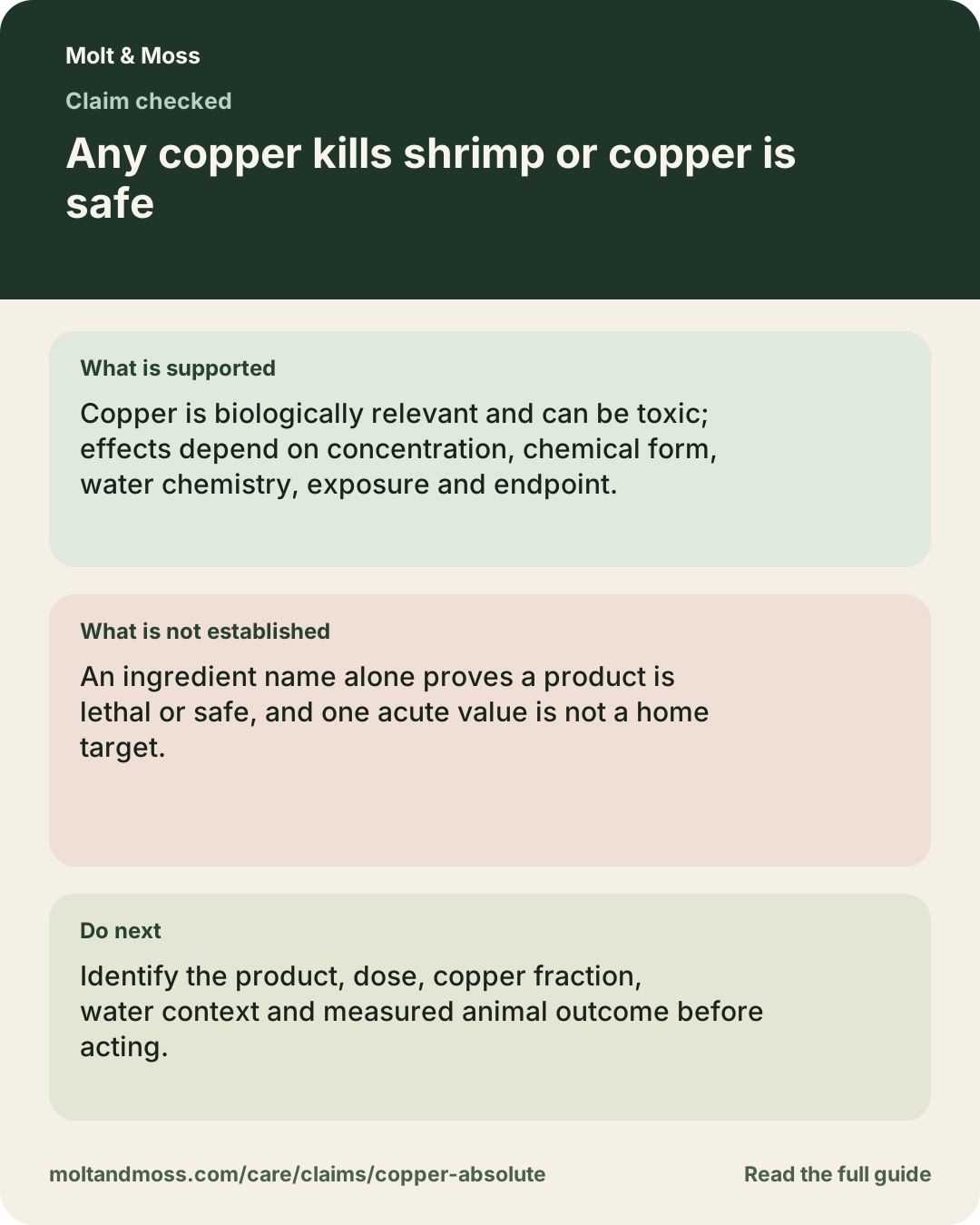
"Any copper kills shrimp or copper is safe"
Use the complete answer. A verdict without its boundary and next action can become another myth.
What is supported
copper is biologically relevant and can be toxic; effects depend on concentration, chemical form, water chemistry, exposure and endpoint.
What is not established
an ingredient name alone proves a product is lethal or safe, and one acute value is not a home target.
What to do next
identify the product, dose, copper fraction, water context and measured animal outcome before acting. Use the chemical-safety guide.
Exact evidence trace
This is the selected claim-level trace, not every source used by the broader guide. Roles describe how each record is used here; they are not quality grades.
Evidence records
- direct support Physiological Response of Neocaridina denticulate to the Toxicity of Cu2+ and Chlorpyrifos: Measures defined copper and mixture exposures with stated endpoints rather than an ingredient-only verdict.
- direct support Gene expression profiling and expression analysis of freshwater shrimp (Neocaridina denticulata denticulata) using expressed sequence tags and short-term exposure to copper: Measures copper-associated transcript responses without establishing a home safe or lethal product rule.
- limitation context Effects of chlordane and lindane on testosterone and vitellogenin levels in green neon shrimp (Neocaridina denticulata): Another chemical series illustrates why concentration, duration, life stage and endpoint must remain explicit.
Supporting authorities
- Aquatic Life Criteria - Copper: Provides copper essentiality, toxicity and ambient-criteria context without a Neocaridina product limit.
- Copper Biotic Ligand Model: Shows why water chemistry changes modeled copper bioavailability.
Named open questions
- Which treatment doses are effective and safe for confirmed Neocaridina health agents? One three-aquarium conference abstract reported complete Deugesia removal and three-day survival of all 12 shrimp after mebendazole or albendazole additions, but it omitted aquarium volume, usable concentration, replicated vessels, explicit control results, sublethal endpoints and recurrence follow-up. No controlled efficacy-and-safety trial was located for common hobby salt, fenbendazole, praziquantel or peroxide doses against named Neocaridina health agents.
Inspect the broader guide evidence dossier for all records, authorities, gaps, searches and changes connected to the practical guide.
Share the complete answer
Open the plain-text answer or open the original teaching card.
The detailed guide owns the evidence and limitations. Challenge this claim with a stable source if an important boundary is missing or stale.