Open this record in the complete research map
Neocaridina iriomotensis, a new species of land-locked freshwater shrimp (Crustacea: Decapoda: Atyidae) from Iriomote Island, southern Ryukyus, Japan
Naruse, Shokita and Cai, 2006. Proceedings of the Biological Society of Washington 119(1): 25-31.
This record is a claim boundary, not a quality badge. Evidence class and species relationship describe what was studied. They do not make the result universal, complete or automatically applicable to a home aquarium.
- Source taxon as published
- Neocaridina iriomotensis Naruse, Shokita and Cai, 2006, described from the upper reaches of Nishifunatsuki in the Nakama River, Iriomote Island, Japan
- Environment
- Field-collected from the lower part of a headwater reach in the upper Nakama River, described as about 5 to 10 m wide, approximately 1 m deep and slow-flowing, where shrimp occurred on aquatic vegetation and tree roots with Macrobrachium shokitai; no water chemistry or temperature was reported
- Life stages
- adult male, adult female, eyed egg
- Reviewed
- 2026-08-12
What was studied
Study shape: The listed material contains one male holotype, 41 paratypes and 49 non-type specimens collected on seven dates from November 1999 through June 2000. Only specimens above 4 mm carapace length were used for the description. Characters were drawn with a camera lucida and measured to 0.01 mm; proportional summaries report medians, ranges and varying sample sizes from 73 to 83. The treatment compared the new species with published N. anhuiensis and topotypic N. ishigakiensis morphology.
Experimental unit: Individual field specimen for morphological ratios and qualitative seasonal comparison; the paper does not report the female or egg denominator underlying its egg-size and 21-to-82 clutch ranges
Endpoints: deposited type and non-type material, rostrum armature and length, pterygostomian spine, pereiopod proportions, season-associated third-pereiopod form, male first and second pleopod morphology, egg dimensions and reported clutch range, habitat and distribution description.
Claim boundary
What it can support: The 2006 morphological treatment supports recognizing N. iriomotensis within its stated species concept and distinguishes its sampled material from N. anhuiensis and N. ishigakiensis using combinations of rostrum, pterygostomian-spine, pereiopod and male pleopod characters. It also documents that the third pereiopod showed sex-associated form in summer specimens but no sexual difference in winter specimens, demonstrating that season can affect the availability of an identification character.
What it cannot support: All listed material came from one named upper-reach locality in the Nakama River, and qualitative wording that the shrimp was common lacks sampling effort and a population denominator. No molecular analysis was included; proposed headwater ecomorph populations had intermediate rostrum lengths and were retained only tentatively pending molecular and ecological study. Published comparisons relied partly on earlier descriptions rather than a balanced multi-population validation, character sample sizes varied because not every specimen contributed every ratio, and no blind key-performance test was conducted. Egg and clutch ranges lack female, clutch and egg denominators. The paper reports no water temperature, pH, hardness, conductivity, dissolved oxygen, nitrogen measurements, diet, culture comparison or aquarium outcome. It cannot identify an aquarium animal from colour or one photograph, authenticate a seller line, prove genetic separation or reproductive isolation, map the complete species range, establish population abundance, or supply a care target, breeding forecast or seasonal aquarium rule.
Publication status audit
Matched in dated Crossref query
The canonical DOI appeared in the dated broad query and carried no registered update in that response. This is a metadata observation, not proof that the work has never changed.
Metadata snapshot reviewed 2026-08-12. Inspect the method, unmatched queue and limitations.
Correction impact
If this source boundary changes, these are the known downstream consumers. The list distinguishes scientific re-review from generated parity and historical follow-up.
Editorial review required (12)
This curated wording or synthesis must be reconsidered when the source boundary changes. A passing generator test cannot decide the new scientific meaning.
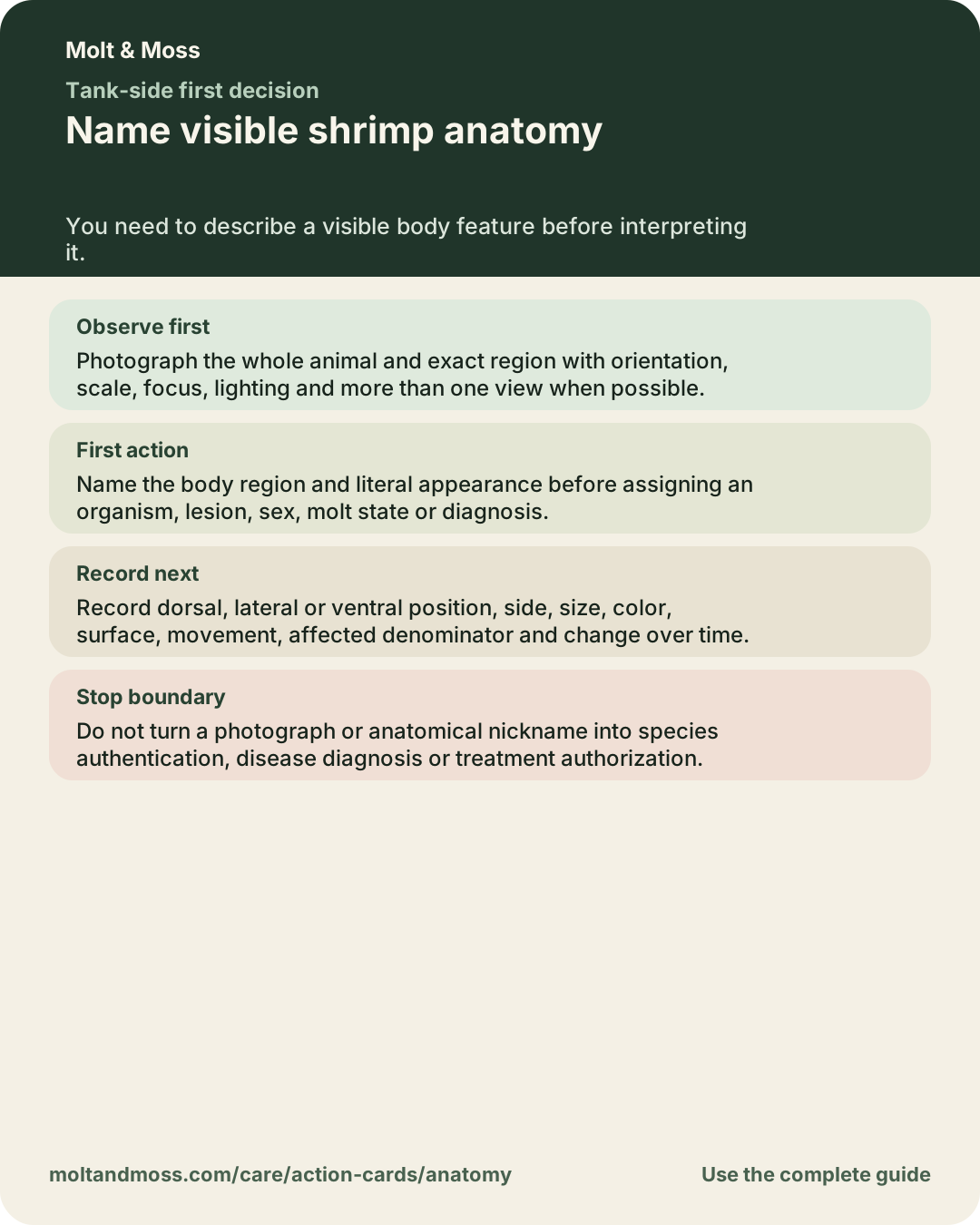
- anatomy decision card Tank-side decision card
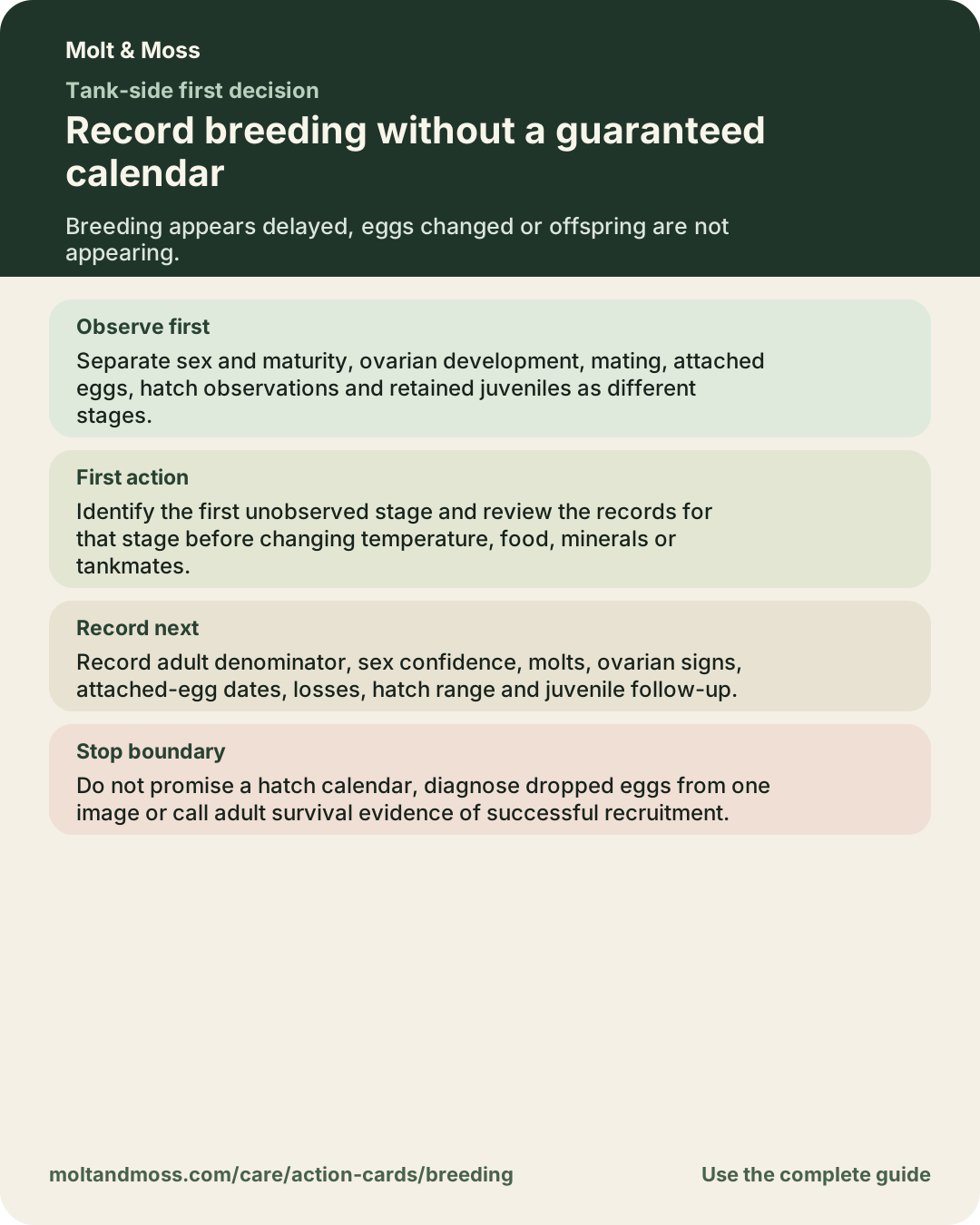
The card translates this guide into an observation, first action, next record and stopping boundary, so all four require editorial review when the source changes. - breeding decision card Tank-side decision card
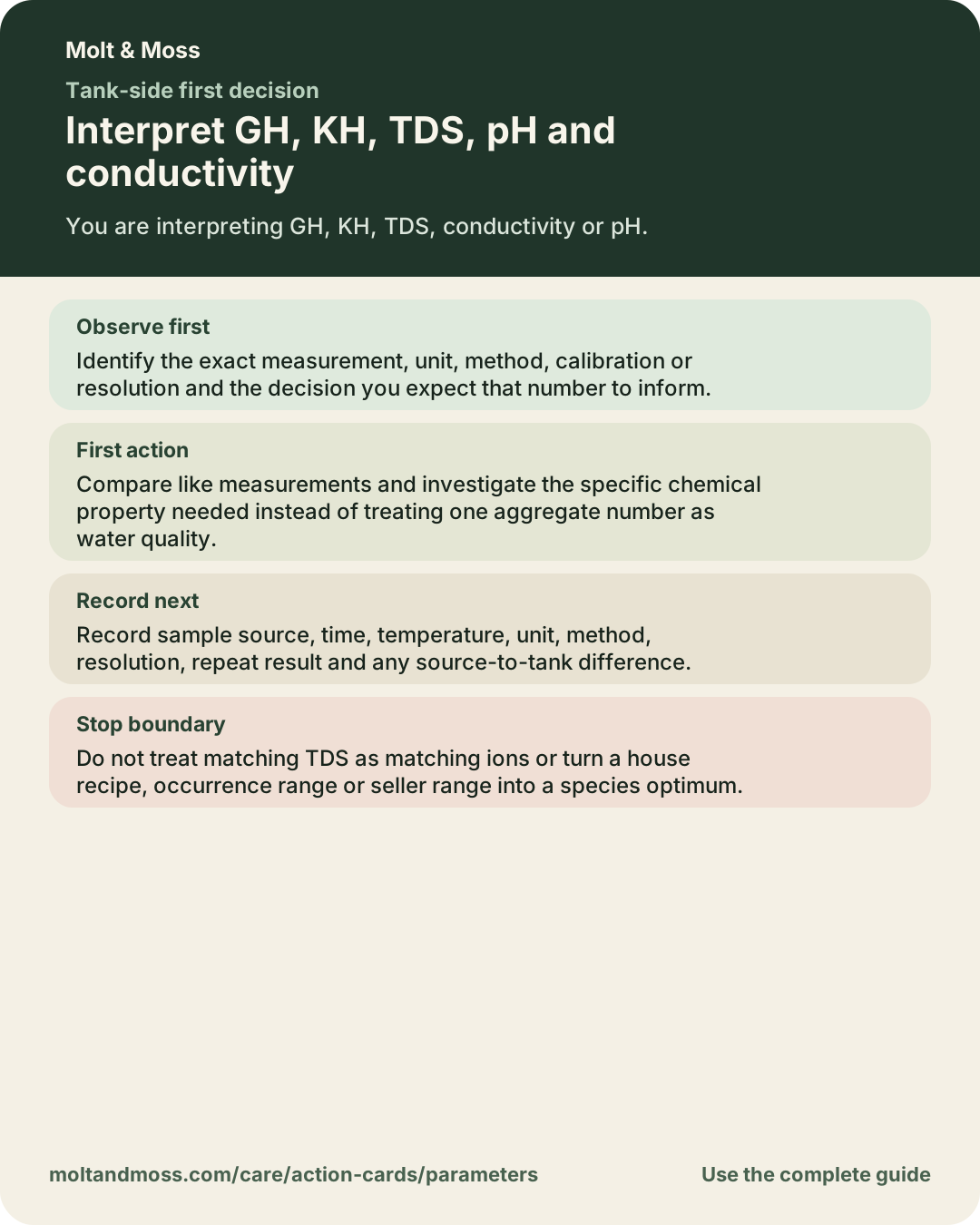
The card translates this guide into an observation, first action, next record and stopping boundary, so all four require editorial review when the source changes. - parameters decision card Tank-side decision card
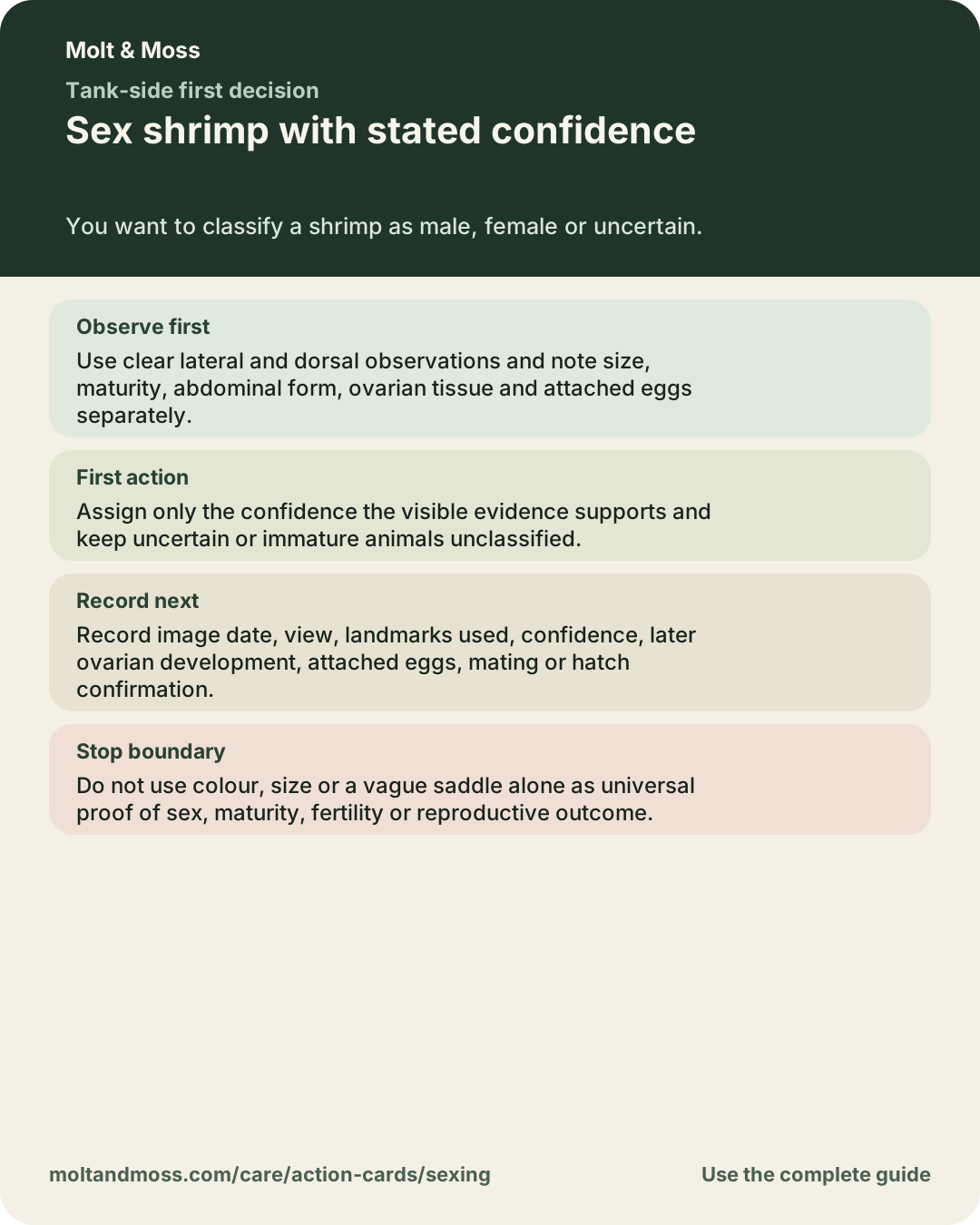
The card translates this guide into an observation, first action, next record and stopping boundary, so all four require editorial review when the source changes. - sexing decision card Tank-side decision card
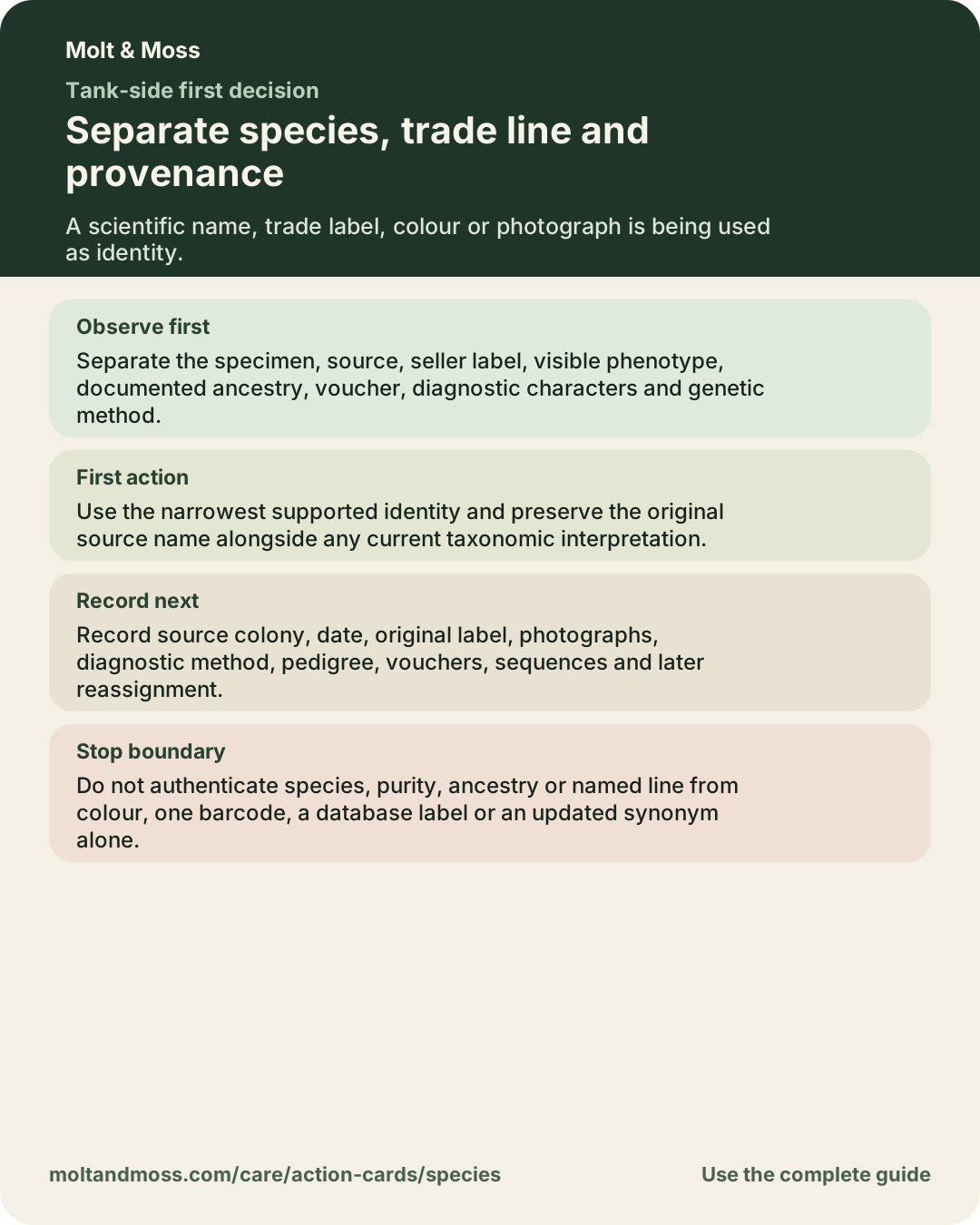
The card translates this guide into an observation, first action, next record and stopping boundary, so all four require editorial review when the source changes. - species decision card Tank-side decision card
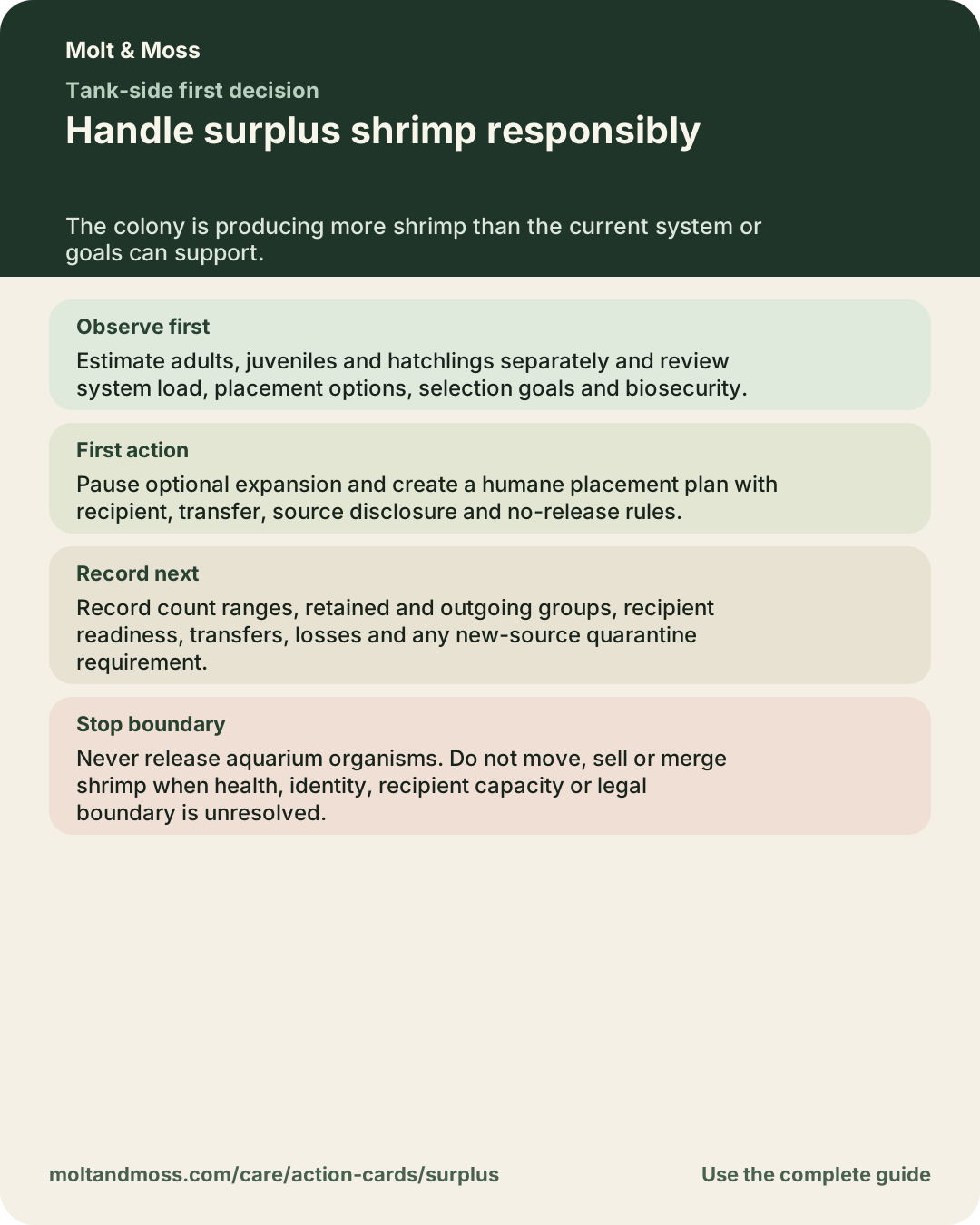
The card translates this guide into an observation, first action, next record and stopping boundary, so all four require editorial review when the source changes. - surplus decision card Tank-side decision card
The card translates this guide into an observation, first action, next record and stopping boundary, so all four require editorial review when the source changes. - anatomy practical guide Practical guide
The guide uses this evidence record and its practical wording must remain inside the revised source boundary. - breeding practical guide Practical guide
The guide uses this evidence record and its practical wording must remain inside the revised source boundary. - parameters practical guide Practical guide
The guide uses this evidence record and its practical wording must remain inside the revised source boundary. - sexing practical guide Practical guide
The guide uses this evidence record and its practical wording must remain inside the revised source boundary. - species practical guide Practical guide
The guide uses this evidence record and its practical wording must remain inside the revised source boundary. - surplus practical guide Practical guide
The guide uses this evidence record and its practical wording must remain inside the revised source boundary.
Generated from governing registry (25)
This surface derives from a governing registry and should update with it, but release tests must still prove parity and routing.
- Record CSL-JSON citation Citation export
The record citation export derives its note and source metadata from the evidence registry. - Record RIS citation Citation export
The record citation export derives its note and source metadata from the evidence registry. - Complete CSL-JSON bibliography Citation export
The complete citation export includes every evidence registry record. - Complete RIS bibliography Citation export
The complete citation export includes every evidence registry record. - anatomy portable decision card Generated decision-card text
The portable text derives from the curated decision-card registry and must preserve every card section and both permanent links. - breeding portable decision card Generated decision-card text
The portable text derives from the curated decision-card registry and must preserve every card section and both permanent links. - parameters portable decision card Generated decision-card text
The portable text derives from the curated decision-card registry and must preserve every card section and both permanent links. - sexing portable decision card Generated decision-card text
The portable text derives from the curated decision-card registry and must preserve every card section and both permanent links. - species portable decision card Generated decision-card text
The portable text derives from the curated decision-card registry and must preserve every card section and both permanent links. - surplus portable decision card Generated decision-card text
The portable text derives from the curated decision-card registry and must preserve every card section and both permanent links. - anatomy complete visual decision card Generated decision-card visual
The typography-only visual and exact accessibility description derive from the curated decision-card registry and must preserve every card section. - breeding complete visual decision card Generated decision-card visual
The typography-only visual and exact accessibility description derive from the curated decision-card registry and must preserve every card section. - parameters complete visual decision card Generated decision-card visual
The typography-only visual and exact accessibility description derive from the curated decision-card registry and must preserve every card section. - sexing complete visual decision card Generated decision-card visual
The typography-only visual and exact accessibility description derive from the curated decision-card registry and must preserve every card section. - species complete visual decision card Generated decision-card visual
The typography-only visual and exact accessibility description derive from the curated decision-card registry and must preserve every card section. - surplus complete visual decision card Generated decision-card visual
The typography-only visual and exact accessibility description derive from the curated decision-card registry and must preserve every card section. - Neocaridina iriomotensis, a new species of land-locked freshwater shrimp (Crustacea: Decapoda: Atyidae) from Iriomote Island, southern Ryukyus, Japan Canonical evidence page
The canonical evidence page derives from the current evidence registry record. - anatomy evidence dossier Generated guide dossier
The dossier derives its linked evidence set from the record care path. - breeding evidence dossier Generated guide dossier
The dossier derives its linked evidence set from the record care path. - parameters evidence dossier Generated guide dossier
The dossier derives its linked evidence set from the record care path. - sexing evidence dossier Generated guide dossier
The dossier derives its linked evidence set from the record care path. - species evidence dossier Generated guide dossier
The dossier derives its linked evidence set from the record care path. - surplus evidence dossier Generated guide dossier
The dossier derives its linked evidence set from the record care path. - Machine-readable knowledge export Machine-readable knowledge export
The versioned export includes the complete evidence registry and source-integrity audit. - Research map record Research map
The research map derives its source boundary from the evidence registry.
Historical record needs follow-up decision (1)
Do not silently rewrite history. Decide whether the prior change record remains accurate and publish a new correction or scope note when needed.
- One season-sensitive character is not a species identification Historical research change
The historical change cites this source. Preserve the old decision and decide whether a new public correction is required.
How this record is classified
Morphology or taxonomy: Anatomy, specimen identification or taxonomic relationships were studied with stated methods. A trade name or photograph cannot replace those methods.
Direct Neocaridina evidence: The source measured animals named within Neocaridina. Direct still does not mean universal or sufficient.
Topics: Anatomy, Breeding, Habitat, Species and taxonomy, Wild populations
Critically appraise this source without a score
These questions fit this record's morphology or taxonomy role. They are prompts, not automatic judgments. Open the original source to answer them.
- Identity and provenance: How were the organism, population, stock and life stage identified and sourced? A published name or seller label can hide a taxonomic, population or life-stage transfer.
- Independent unit: What unit was independently assigned or sampled, and how many units support each comparison? Animal counts do not create independent replication when animals share a vessel, site, family or treatment history.
- Comparison and context: What was the actual comparator, allocation process, environment, duration and material condition? A result has meaning only against the comparison and conditions that produced it.
- Endpoint and measurement: Which endpoint was measured, with what method, unit, timing, resolution and decision rule? One endpoint cannot silently become survival, welfare, diagnosis, reproduction or long-term population performance.
- Denominators and missingness: Are starting counts, exclusions, losses, missing observations and analysis denominators reconciled? Unreported or changing denominators can alter the apparent direction, precision and applicability of a result.
- Transfer boundary: What is the nearest tempting aquarium claim that this source design cannot establish? Direct evidence can still be narrow, and adjacent evidence can be useful only while the inference remains visible.
- Examined material: Which specimens, localities, sexes, stages, types or sequence accessions were actually examined? A diagnosis applies to examined material and methods, not automatically to a trade-line photograph.
- Diagnostic characters: Which characters or loci distinguish the taxon, and were alternatives explicitly compared? Color alone may be variable, convergent or unrelated to the diagnostic character.
- Name history: Were synonyms, historical combinations, type material and later revisions checked? An older title can describe a population that later work placed in another taxon.
- Consumer identification limit: Can the required character or method be observed reliably in an ordinary live-animal image? A valid taxonomic method may still be unavailable to a keeper examining one photograph.
Where it is used
Reuse the reviewed citation boundary
Download CSL-JSON or download RIS. Both retain this record's support, limitation and review note.
Challenge a transcription, interpretation or missing boundary. A challenge changes the record only after editorial review.