Open this record in the complete research map
Epibiont Cohabitation in Freshwater Shrimp Neocaridina davidi with the Description of Two Species New to Science, Cladogonium kumaki sp. nov. and Monodiscus kumaki sp. nov., and Redescription of Scutariella japonica and Holtodrilus truncatus
Maciaszek et al., 2023. Animals 13(10): 1616.
This record is a claim boundary, not a quality badge. Evidence class and species relationship describe what was studied. They do not make the result universal, complete or automatically applicable to a home aquarium.
- Source taxon as published
- Neocaridina davidi
- Environment
- Nine hundred approximately 2.0 cm shrimp collected in November 2018 from three wild sites, three aquaculture-pond sources and three aquarium sources in Taiwan, then air-freighted in habitat water to Poland and inspected after a 10-hour acclimation in the transport-bag water
- Life stages
- size-selected traded animal approximately 2.0 +/- 0.17 cm, female and male, with sexing method not stated
- Reviewed
- 2026-08-12
What was studied
Study shape: One hundred shrimp from each of three locations within each source category were inspected individually in rostral, branchial, pereiopodal and pleopodal regions. Epibionts were isolated under clove-oil and ethanol sedation, identified morphologically at 500 to 1500x, and followed by an incompletely reported two-week quarantine observation. Prevalence models used source category and sex, microhabitat models used body region, and Spearman correlations assessed co-occurrence, egg production and molting.
Experimental unit: Individual examined shrimp nested within nine source locations and their transport bags; the reported individual-level GLMs do not describe source location or bag as a cluster or random effect
Endpoints: morphological identity and measurements, prevalence and mean intensity, co-occurrence, body-region distribution, egg-production association, molting association, observed cuticle traces and recolonization after molt.
Claim boundary
What it can support: The authors distinguished Cladogonium kumaki, Monodiscus kumaki, Scutariella japonica and Holtodrilus truncatus, plus ciliates and rotifers. At least one recorded epibiont occurred on 688 of 900 shrimp and H. truncatus on 390 of 900. All four named taxa occurred in all four body regions with different distributions; H. truncatus was relatively associated with rostral and pereiopodal regions. Live H. truncatus and temnocephalids were observed leaving shed exuviae and seeking a host, sometimes recolonizing the nearby original shrimp.
What it cannot support: The source categories were observed, not assigned treatments, and are represented by only three locations each. Transport, ten-hour acclimation and microscopy handling may have changed organism abundance or location. Source-level clustering was not included in the reported GLMs, the sample was strongly female-skewed, and the sexing method was not stated. Morphological identification required microscopy and does not validate a phone-image diagnosis. Egg and molt analyses were correlational; the H. truncatus molt row reports rho -0.26 with p 0.847, an internally inconsistent combination for the surrounding interpretation. The quarantine allocation, denominator, water conditions, removal exposure and outcome measurements were not fully reported. Molting did not clear live worms, and the paper did not assign or compare a salt, medication or home-removal treatment. The sample is not prevalence for every seller, home colony or geographic trade route.
Publication status audit
Matched in dated Crossref query
The canonical DOI appeared in the dated broad query and carried no registered update in that response. This is a metadata observation, not proof that the work has never changed.
Metadata snapshot reviewed 2026-08-12. Inspect the method, unmatched queue and limitations.
Correction impact
If this source boundary changes, these are the known downstream consumers. The list distinguishes scientific re-review from generated parity and historical follow-up.
Editorial review required (13)
This curated wording or synthesis must be reconsidered when the source boundary changes. A passing generator test cannot decide the new scientific meaning.
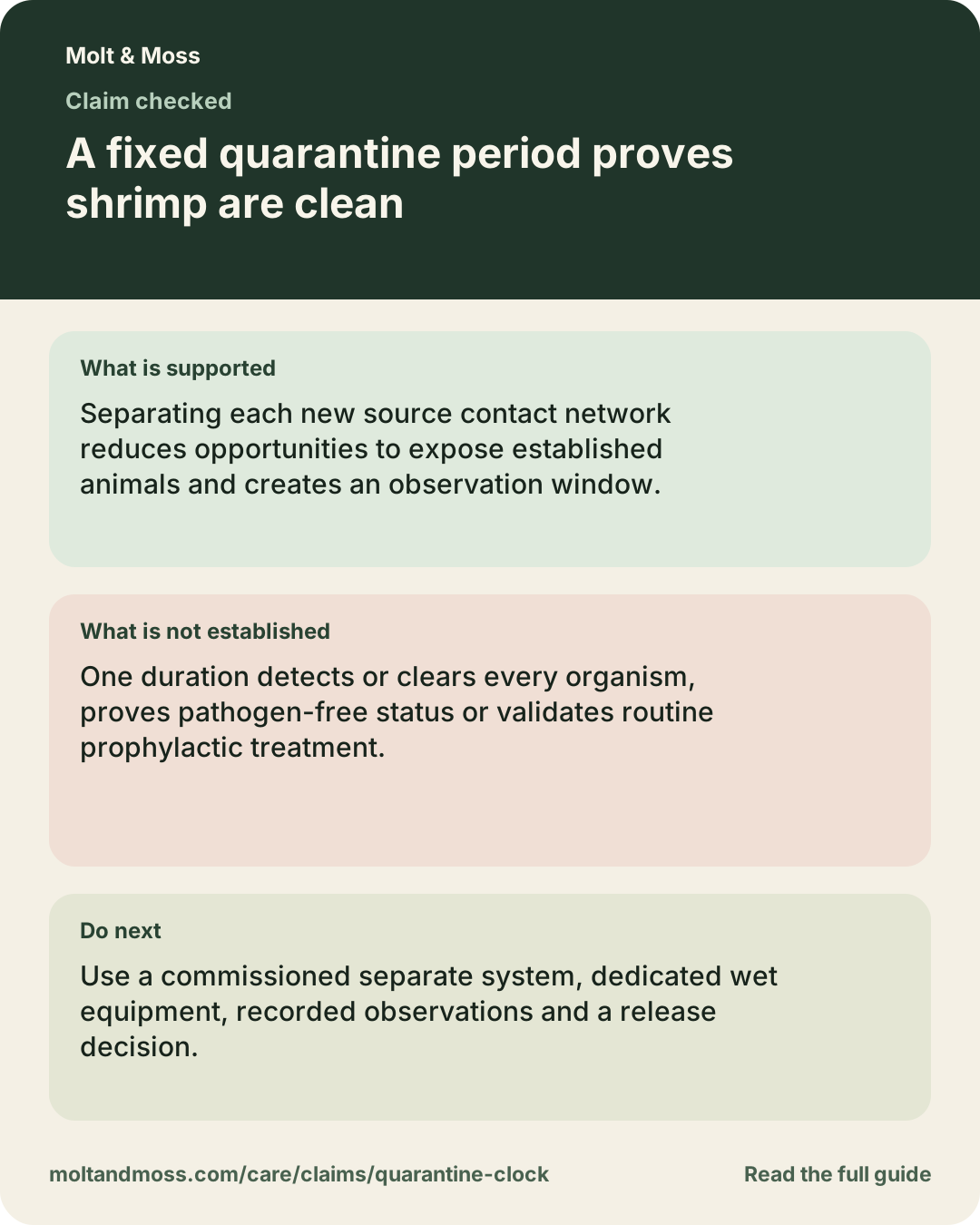
- A fixed quarantine period proves shrimp are clean Curated claim check
The exact claim trace uses this record as direct support: Documents identified epibionts and observation limits without validating one clearance interval. - anatomy decision card Tank-side decision card
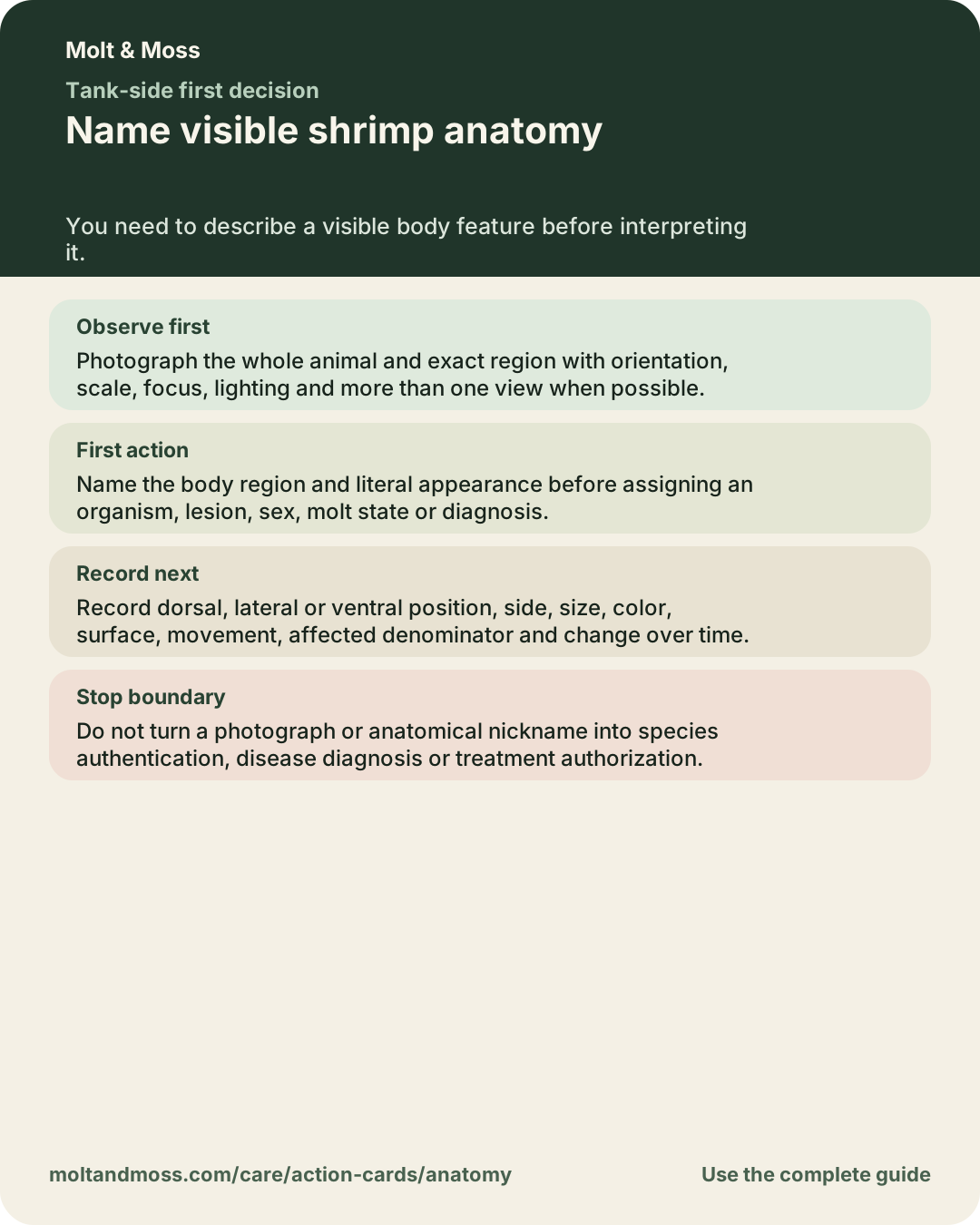
The card translates this guide into an observation, first action, next record and stopping boundary, so all four require editorial review when the source changes. - health decision card Tank-side decision card
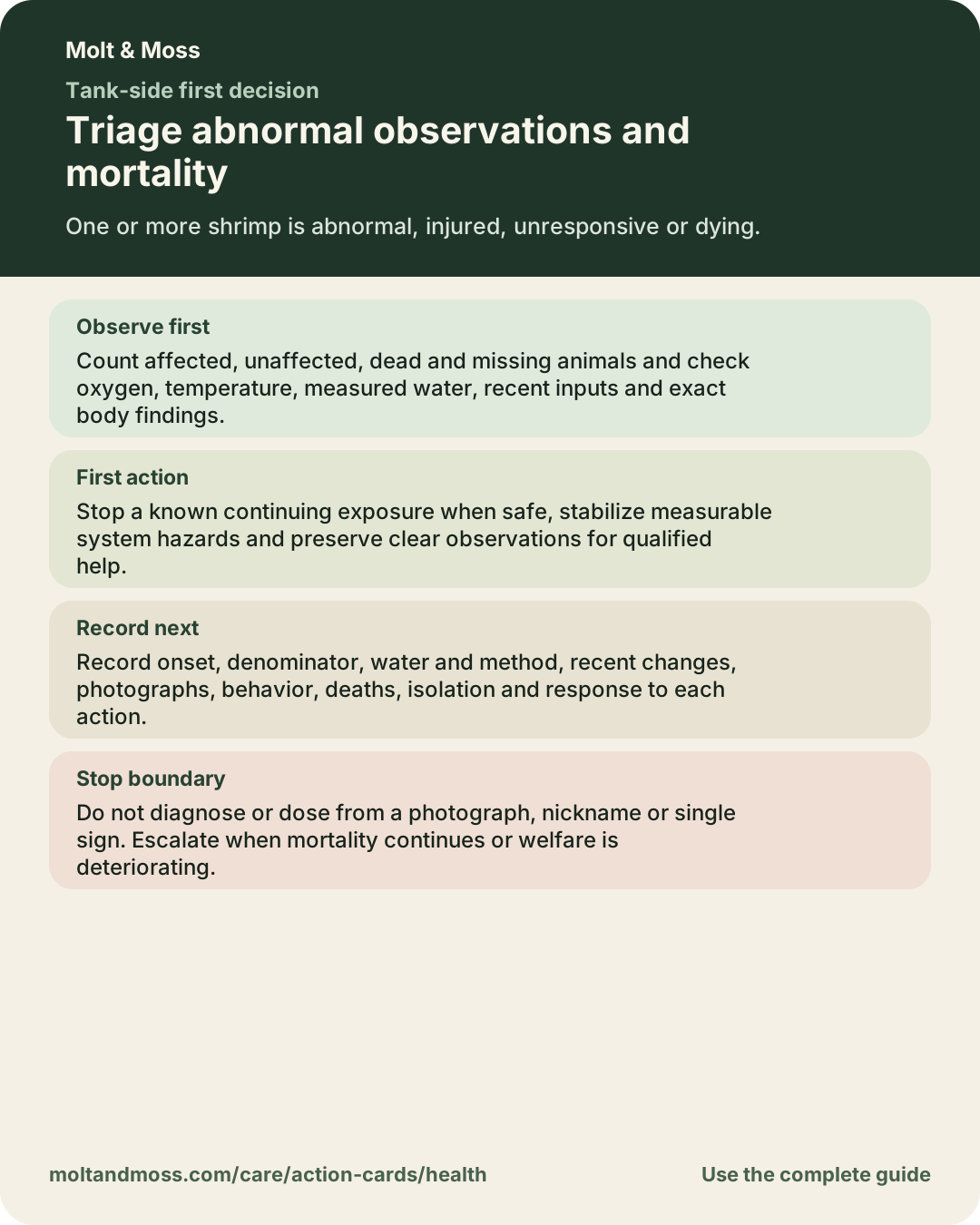
The card translates this guide into an observation, first action, next record and stopping boundary, so all four require editorial review when the source changes. - molting decision card Tank-side decision card
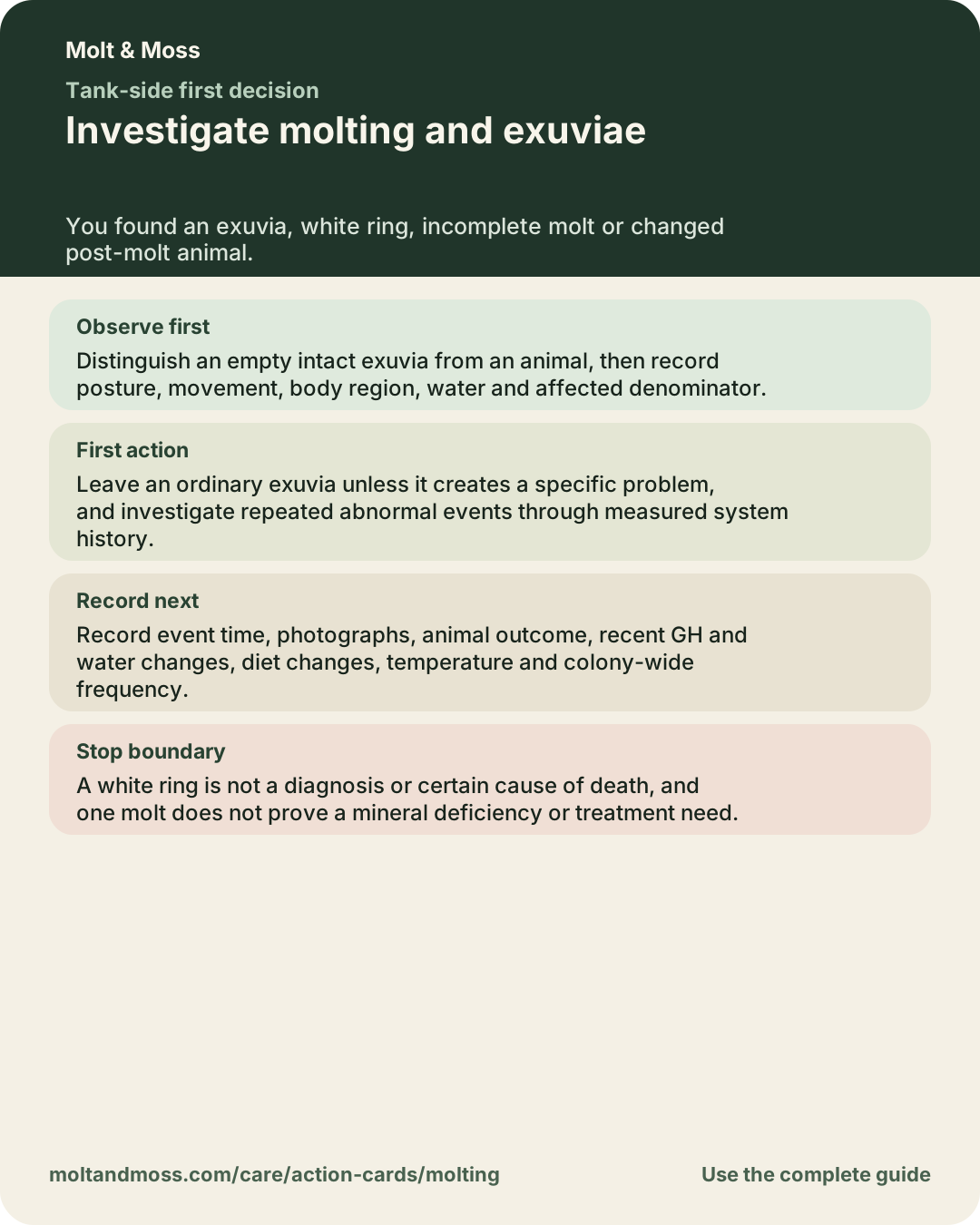
The card translates this guide into an observation, first action, next record and stopping boundary, so all four require editorial review when the source changes. - quarantine decision card Tank-side decision card
The card translates this guide into an observation, first action, next record and stopping boundary, so all four require editorial review when the source changes. - anatomy practical guide Practical guide
The guide uses this evidence record and its practical wording must remain inside the revised source boundary. - health practical guide Practical guide
The guide uses this evidence record and its practical wording must remain inside the revised source boundary. - molting practical guide Practical guide
The guide uses this evidence record and its practical wording must remain inside the revised source boundary. - quarantine practical guide Practical guide
The guide uses this evidence record and its practical wording must remain inside the revised source boundary. - round1-husbandry-quarantine Curated first-round reviewer assignment
The frozen reviewer scope or consequential-failure check uses this record through the assigned claim trace or comparison and must be reconsidered before invitation or response. - treatment-efficacy knowledge gap Canonical knowledge gap
The current knowledge-gap boundary depends on a dated search that used this exact source and must be reconsidered if the source meaning changes. - treatment-efficacy answerability brief Answerability brief
The decision, endpoint, minimum design or closure rule may change when evidence used in the linked gap search is corrected. - treatment-efficacy research allocation Current research allocation
The current allocation, activation trigger, next permitted unit or stop decision may change when evidence used in the linked gap search is corrected.
Generated from governing registry (22)
This surface derives from a governing registry and should update with it, but release tests must still prove parity and routing.
- Record CSL-JSON citation Citation export
The record citation export derives its note and source metadata from the evidence registry. - Record RIS citation Citation export
The record citation export derives its note and source metadata from the evidence registry. - Complete CSL-JSON bibliography Citation export
The complete citation export includes every evidence registry record. - Complete RIS bibliography Citation export
The complete citation export includes every evidence registry record. - quarantine teaching card Generated claim teaching card
The teaching card is generated from the curated claim wording. - quarantine portable reply Generated claim text
The portable reply is generated from the curated claim wording. - anatomy portable decision card Generated decision-card text
The portable text derives from the curated decision-card registry and must preserve every card section and both permanent links. - health portable decision card Generated decision-card text
The portable text derives from the curated decision-card registry and must preserve every card section and both permanent links. - molting portable decision card Generated decision-card text
The portable text derives from the curated decision-card registry and must preserve every card section and both permanent links. - quarantine portable decision card Generated decision-card text
The portable text derives from the curated decision-card registry and must preserve every card section and both permanent links. - anatomy complete visual decision card Generated decision-card visual
The typography-only visual and exact accessibility description derive from the curated decision-card registry and must preserve every card section. - health complete visual decision card Generated decision-card visual
The typography-only visual and exact accessibility description derive from the curated decision-card registry and must preserve every card section. - molting complete visual decision card Generated decision-card visual
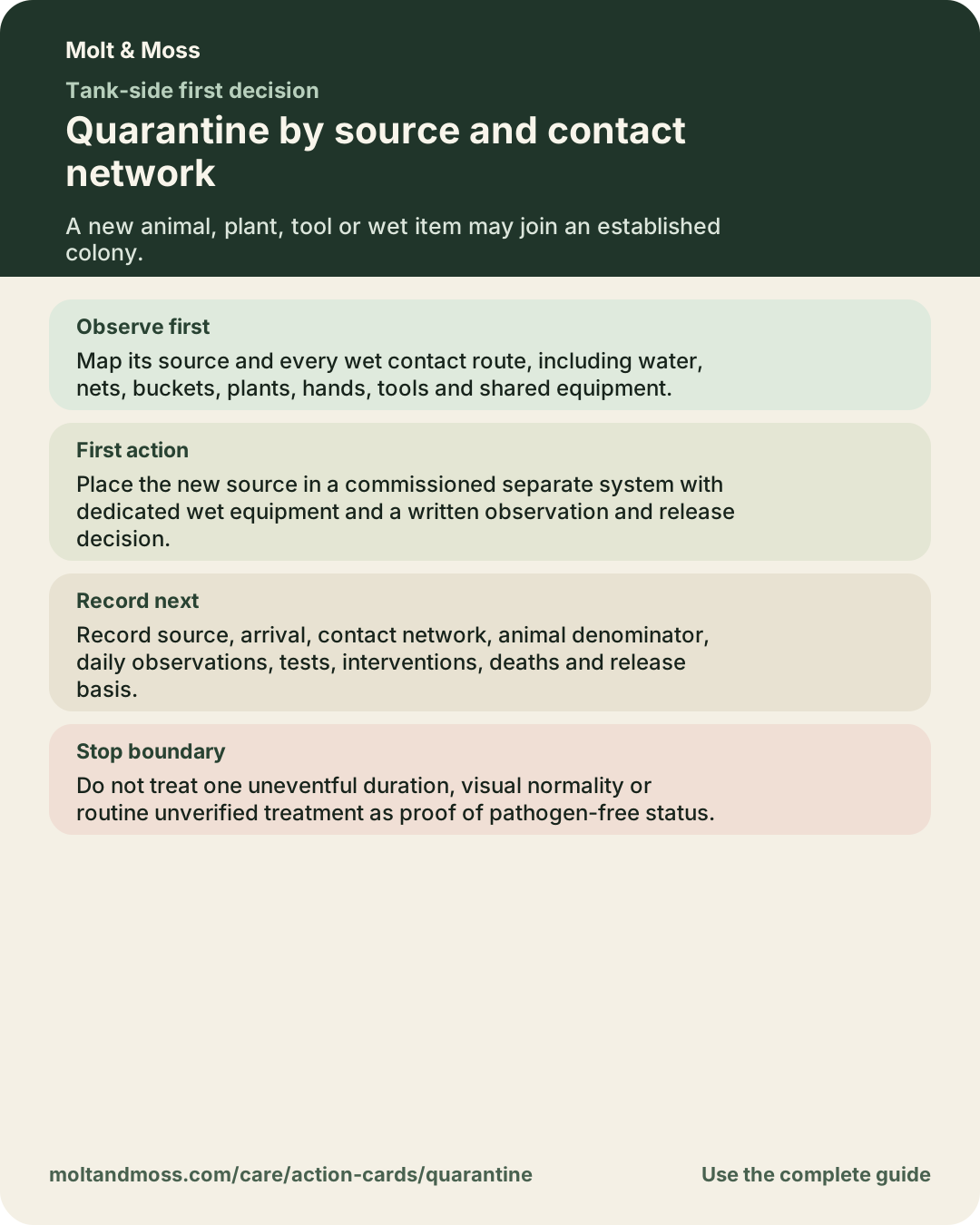
The typography-only visual and exact accessibility description derive from the curated decision-card registry and must preserve every card section. - quarantine complete visual decision card Generated decision-card visual
The typography-only visual and exact accessibility description derive from the curated decision-card registry and must preserve every card section. - Epibiont Cohabitation in Freshwater Shrimp Neocaridina davidi with the Description of Two Species New to Science, Cladogonium kumaki sp. nov. and Monodiscus kumaki sp. nov., and Redescription of Scutariella japonica and Holtodrilus truncatus Canonical evidence page
The canonical evidence page derives from the current evidence registry record. - anatomy evidence dossier Generated guide dossier
The dossier derives its linked evidence set from the record care path. - health evidence dossier Generated guide dossier
The dossier derives its linked evidence set from the record care path. - molting evidence dossier Generated guide dossier
The dossier derives its linked evidence set from the record care path. - quarantine evidence dossier Generated guide dossier
The dossier derives its linked evidence set from the record care path. - quarantine review item Generated independent-review item
The independent-review item derives from the exact claim trace and publication-status registry. - Machine-readable knowledge export Machine-readable knowledge export
The versioned export includes the complete evidence registry and source-integrity audit. - Research map record Research map
The research map derives its source boundary from the evidence registry.
Historical record needs follow-up decision (1)
Do not silently rewrite history. Decide whether the prior change record remains accurate and publish a new correction or scope note when needed.
- Which common hobby treatments are both effective against confirmed targets and safe for Neocaridina? Dated literature search
The dated search used this exact source as a candidate (included: Epibiont Cohabitation in Freshwater Shrimp Neocaridina davidi). Preserve the search history and decide whether a revised or additional search is required.
How this record is classified
Morphology or taxonomy: Anatomy, specimen identification or taxonomic relationships were studied with stated methods. A trade name or photograph cannot replace those methods.
Direct Neocaridina evidence: The source measured animals named within Neocaridina. Direct still does not mean universal or sufficient.
Topics: Health, Anatomy, Molting, Species and taxonomy, Wild populations
Critically appraise this source without a score
These questions fit this record's morphology or taxonomy role. They are prompts, not automatic judgments. Open the original source to answer them.
- Identity and provenance: How were the organism, population, stock and life stage identified and sourced? A published name or seller label can hide a taxonomic, population or life-stage transfer.
- Independent unit: What unit was independently assigned or sampled, and how many units support each comparison? Animal counts do not create independent replication when animals share a vessel, site, family or treatment history.
- Comparison and context: What was the actual comparator, allocation process, environment, duration and material condition? A result has meaning only against the comparison and conditions that produced it.
- Endpoint and measurement: Which endpoint was measured, with what method, unit, timing, resolution and decision rule? One endpoint cannot silently become survival, welfare, diagnosis, reproduction or long-term population performance.
- Denominators and missingness: Are starting counts, exclusions, losses, missing observations and analysis denominators reconciled? Unreported or changing denominators can alter the apparent direction, precision and applicability of a result.
- Transfer boundary: What is the nearest tempting aquarium claim that this source design cannot establish? Direct evidence can still be narrow, and adjacent evidence can be useful only while the inference remains visible.
- Examined material: Which specimens, localities, sexes, stages, types or sequence accessions were actually examined? A diagnosis applies to examined material and methods, not automatically to a trade-line photograph.
- Diagnostic characters: Which characters or loci distinguish the taxon, and were alternatives explicitly compared? Color alone may be variable, convergent or unrelated to the diagnostic character.
- Name history: Were synonyms, historical combinations, type material and later revisions checked? An older title can describe a population that later work placed in another taxon.
- Consumer identification limit: Can the required character or method be observed reliably in an ordinary live-animal image? A valid taxonomic method may still be unavailable to a keeper examining one photograph.
Where it is used
Reuse the reviewed citation boundary
Download CSL-JSON or download RIS. Both retain this record's support, limitation and review note.
Challenge a transcription, interpretation or missing boundary. A challenge changes the record only after editorial review.