Open this record in the complete research map
Microhabitat distribution and behaviour of Branchiobdellidan Holtodrilus truncatus found on the freshwater shrimp Neocaridina spp. from the Sugo River, Japan
Niwa et al., 2014. Central European Journal of Biology 9(1): 80-85.
This record is a claim boundary, not a quality badge. Evidence class and species relationship describe what was studied. They do not make the result universal, complete or automatically applicable to a home aquarium.
- Source taxon as published
- Wild Sugo River shrimp identified only as Neocaridina spp.; the catch could include native N. denticulata denticulata and imported Neocaridina lineages
- Environment
- Field collections at three Sugo River stations from 2003 to 2011 plus laboratory observations in source river water, aerated aquaria, individual bottles, dishes and 100 mL vials
- Life stages
- field-collected male and female host shrimp, unovigerous female host, Holtodrilus truncatus adult, cocoon, embryo and newly hatched worm
- Reviewed
- 2026-08-12
What was studied
Study shape: The authors collected 271 host shrimp across nine years, mapped H. truncatus body locations on 141 hosts in 2011, measured 23 cocoons, observed 15 host-removed worms from 14 shrimp in no-added-food survival containers, and placed five removed worms sequentially with a reported pool of 28 potential host shrimp across several taxa.
Experimental unit: Individual host for mapped attachment location; individual cocoon for diameter; nominally individual host-removed worm, although only 13 of 15 worms receive a reported container and survival range; and an unresolved sequence of five worms exposed one host at a time in the host-exchange demonstration
Endpoints: host body location, cocoon diameter and embryo count, observed hatching and gill-chamber entry, days survived after host removal, attachment or predation during host exchange, movement from deteriorating to surviving captive hosts.
Claim boundary
What it can support: Among 141 mapped wild hosts, reported H. truncatus locations were 55.3 percent between the first pleopod and fifth pereiopod, 17.0 percent on the carapace, 15.6 percent at the eye base, 8.5 percent on the antennule and 3.6 percent around the egg mass. Twenty-three cocoons measured 0.58 to 0.76 mm, and the largest observed cocoon contained 14 developing worms. Ten worms in 100 mL vials survived 7 to 46 days and three in dishes survived 12 to 21 days after host removal without added food. In the host-exchange observation, all five supplied worms attached to Neocaridina hosts within three hours.
What it cannot support: Host shrimp were resolved only to Neocaridina spp. in a river where native and introduced lineages were discussed, so the findings are not species-specific N. davidi evidence. The 271 total catch, 152 animals mentioned in the attachment procedure and 141 mapped hosts are not fully reconciled, station and date denominators are missing and the location percentages do not state whether each host contributed one location or all worms were counted. No molecular confirmation of host or worm identity was reported in this article. The survival containers differed in volume, light and temperature, two of 15 worms are absent from the reported ranges, ages were unknown, water was not renewed or analytically described, death criteria were not stated and there was no fed or host-present control. The five-worm host exchange omitted exposure order, reuse mapping, independent replication, container details and complete outcomes for 28 potential hosts. Disappearance under an opaque crayfish carapace was interpreted as migration rather than directly confirmed. Claims that egg-bearing hosts hatched healthy young had no defined denominator, comparison or follow-up. Observed migration from deteriorating hosts does not establish transmission probability or a quarantine duration. The study measured no controlled shrimp lesion, respiration, growth, reproduction, mortality causation, treatment efficacy, recurrence or host safety and cannot validate predatory tankmates, forced host deterioration, worm collection, medication or a fixed isolation period.
Publication status audit
Matched in dated Crossref query
The canonical DOI appeared in the dated broad query and carried no registered update in that response. This is a metadata observation, not proof that the work has never changed.
Metadata snapshot reviewed 2026-08-12. Inspect the method, unmatched queue and limitations.
Correction impact
If this source boundary changes, these are the known downstream consumers. The list distinguishes scientific re-review from generated parity and historical follow-up.
Editorial review required (8)
This curated wording or synthesis must be reconsidered when the source boundary changes. A passing generator test cannot decide the new scientific meaning.
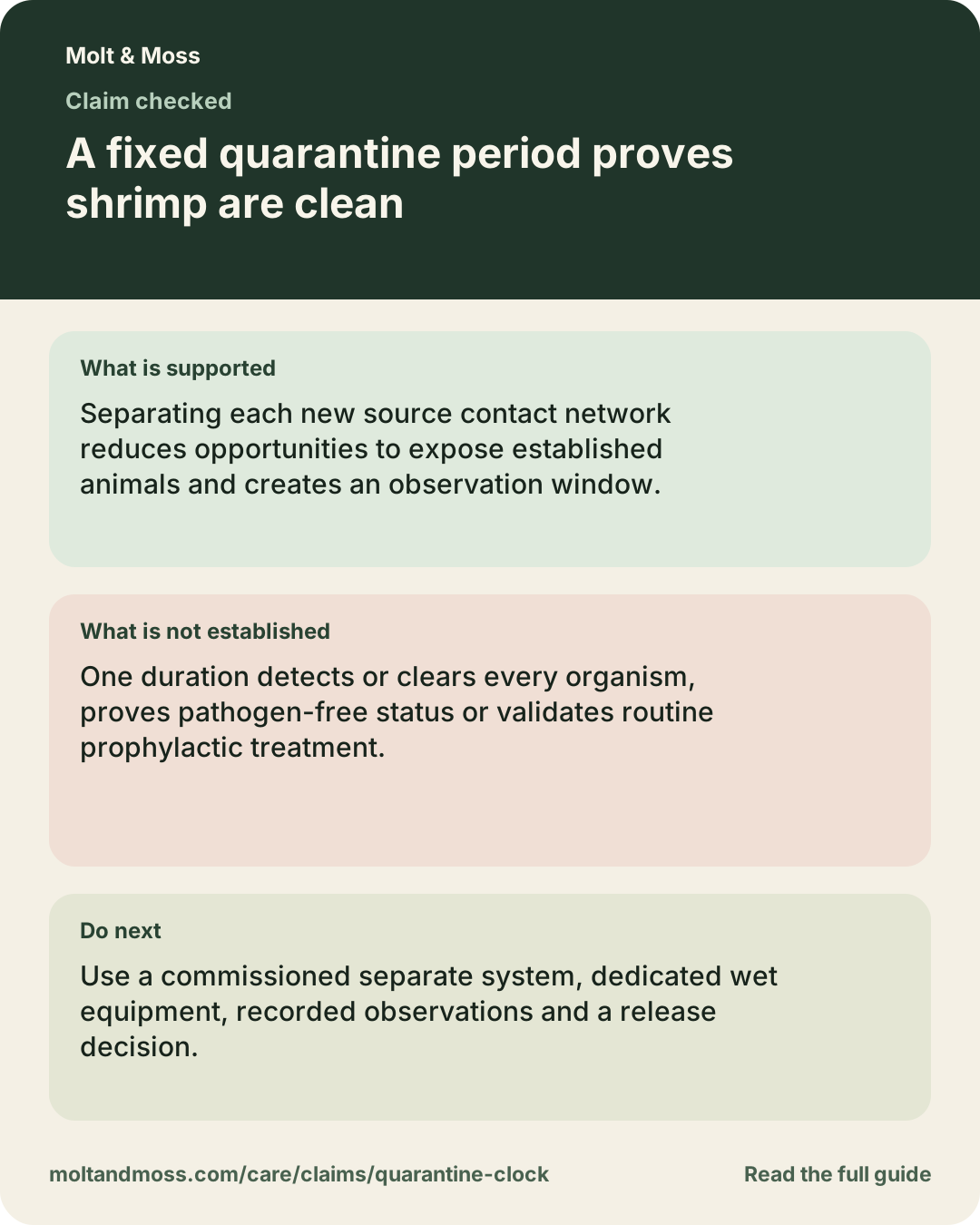
- A fixed quarantine period proves shrimp are clean Curated claim check
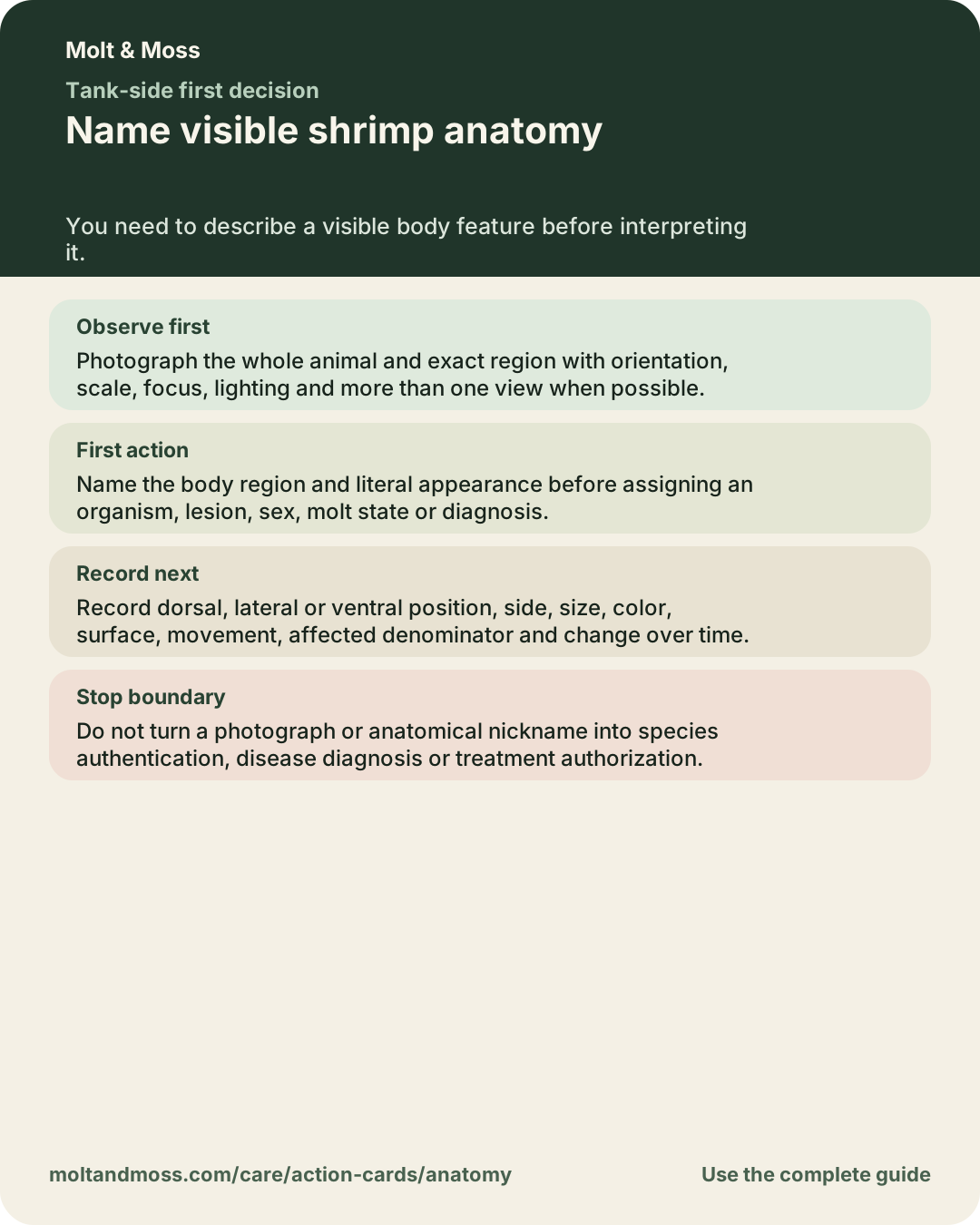
The exact claim trace uses this record as direct support: Documents host-associated worm observations while leaving transmission probability and quarantine duration unresolved. - anatomy decision card Tank-side decision card
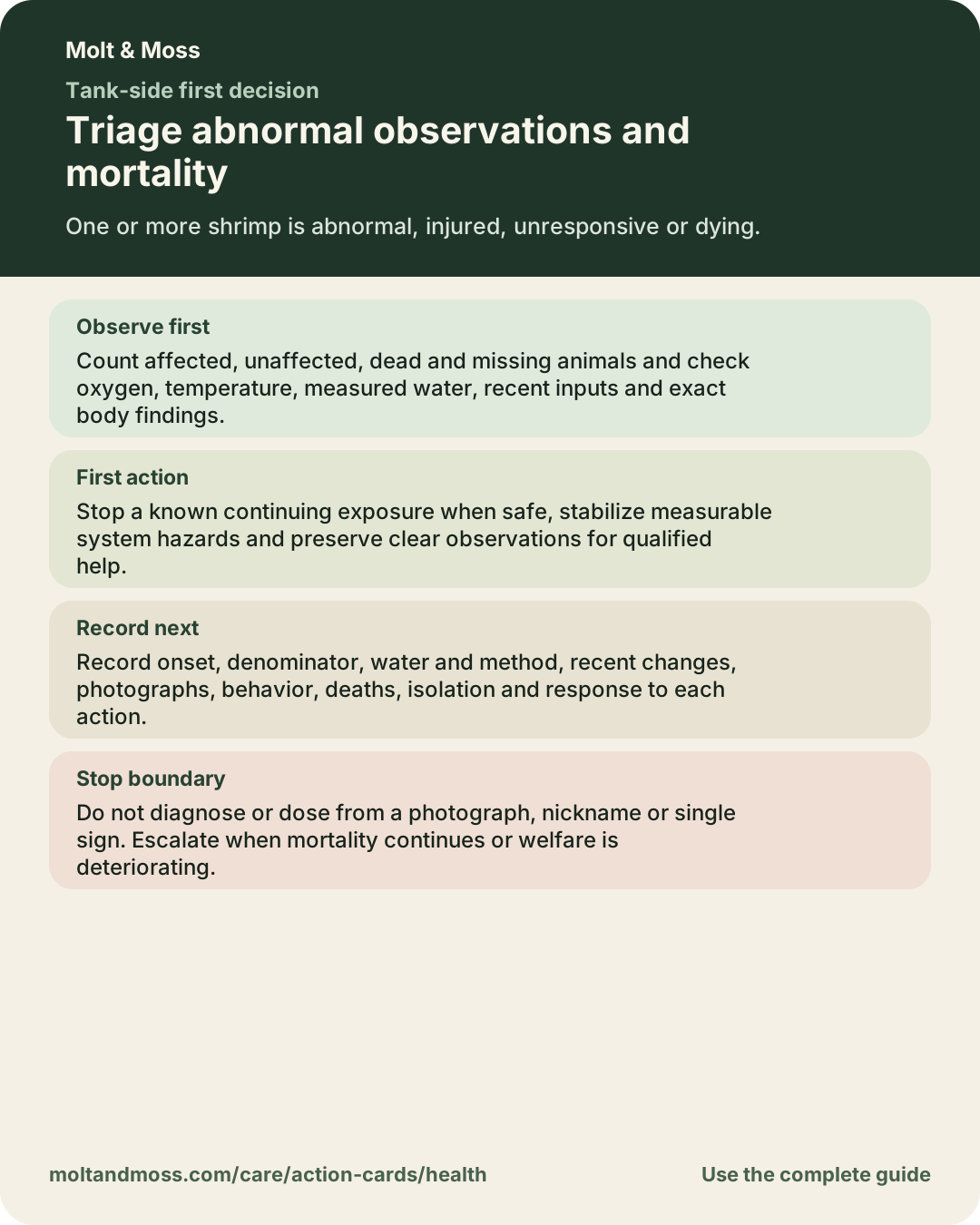
The card translates this guide into an observation, first action, next record and stopping boundary, so all four require editorial review when the source changes. - health decision card Tank-side decision card
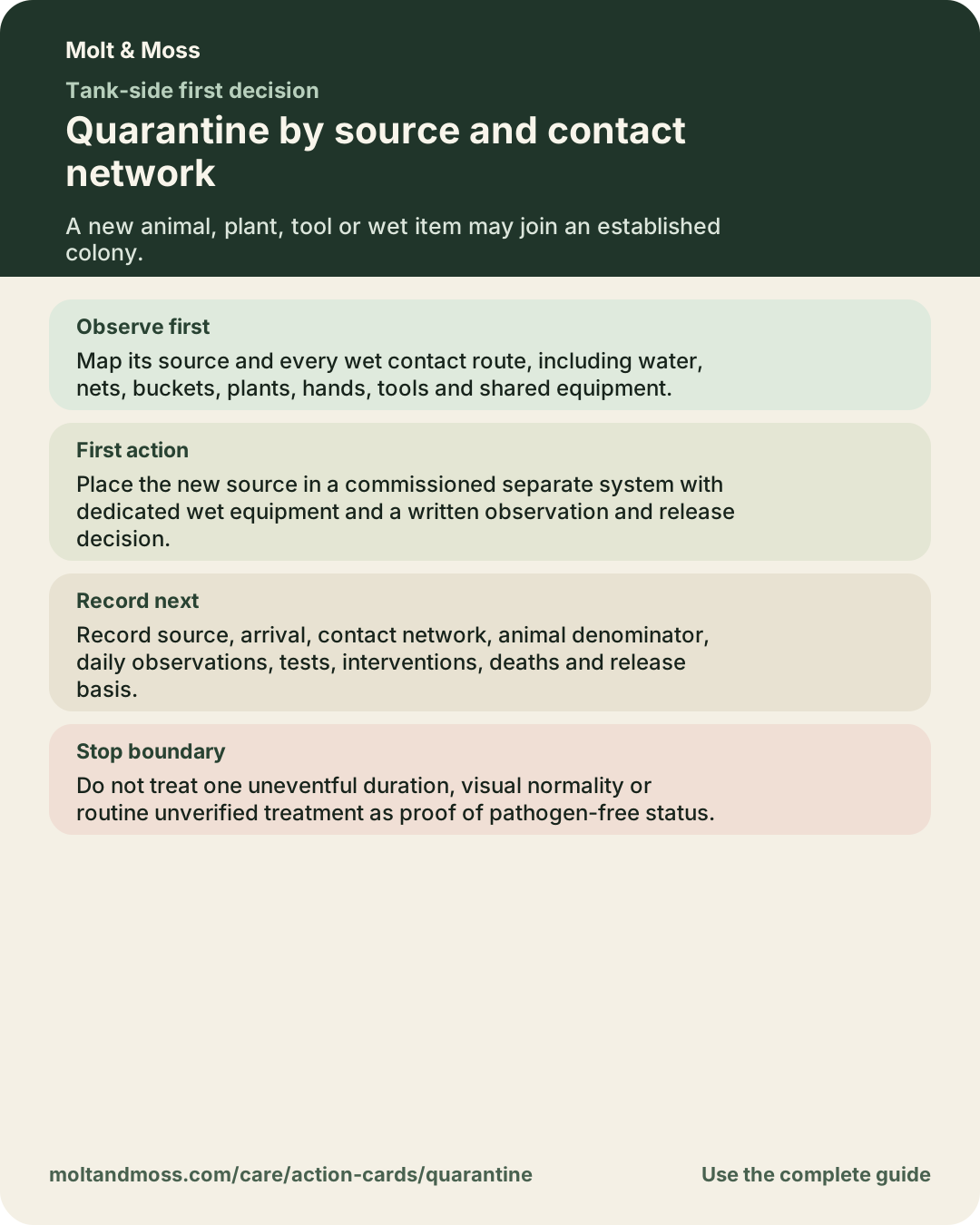
The card translates this guide into an observation, first action, next record and stopping boundary, so all four require editorial review when the source changes. - quarantine decision card Tank-side decision card
The card translates this guide into an observation, first action, next record and stopping boundary, so all four require editorial review when the source changes. - anatomy practical guide Practical guide
The guide uses this evidence record and its practical wording must remain inside the revised source boundary. - health practical guide Practical guide
The guide uses this evidence record and its practical wording must remain inside the revised source boundary. - quarantine practical guide Practical guide
The guide uses this evidence record and its practical wording must remain inside the revised source boundary. - round1-husbandry-quarantine Curated first-round reviewer assignment
The frozen reviewer scope or consequential-failure check uses this record through the assigned claim trace or comparison and must be reconsidered before invitation or response.
Generated from governing registry (19)
This surface derives from a governing registry and should update with it, but release tests must still prove parity and routing.
- Record CSL-JSON citation Citation export
The record citation export derives its note and source metadata from the evidence registry. - Record RIS citation Citation export
The record citation export derives its note and source metadata from the evidence registry. - Complete CSL-JSON bibliography Citation export
The complete citation export includes every evidence registry record. - Complete RIS bibliography Citation export
The complete citation export includes every evidence registry record. - quarantine teaching card Generated claim teaching card
The teaching card is generated from the curated claim wording. - quarantine portable reply Generated claim text
The portable reply is generated from the curated claim wording. - anatomy portable decision card Generated decision-card text
The portable text derives from the curated decision-card registry and must preserve every card section and both permanent links. - health portable decision card Generated decision-card text
The portable text derives from the curated decision-card registry and must preserve every card section and both permanent links. - quarantine portable decision card Generated decision-card text
The portable text derives from the curated decision-card registry and must preserve every card section and both permanent links. - anatomy complete visual decision card Generated decision-card visual
The typography-only visual and exact accessibility description derive from the curated decision-card registry and must preserve every card section. - health complete visual decision card Generated decision-card visual
The typography-only visual and exact accessibility description derive from the curated decision-card registry and must preserve every card section. - quarantine complete visual decision card Generated decision-card visual
The typography-only visual and exact accessibility description derive from the curated decision-card registry and must preserve every card section. - Microhabitat distribution and behaviour of Branchiobdellidan Holtodrilus truncatus found on the freshwater shrimp Neocaridina spp. from the Sugo River, Japan Canonical evidence page
The canonical evidence page derives from the current evidence registry record. - anatomy evidence dossier Generated guide dossier
The dossier derives its linked evidence set from the record care path. - health evidence dossier Generated guide dossier
The dossier derives its linked evidence set from the record care path. - quarantine evidence dossier Generated guide dossier
The dossier derives its linked evidence set from the record care path. - quarantine review item Generated independent-review item
The independent-review item derives from the exact claim trace and publication-status registry. - Machine-readable knowledge export Machine-readable knowledge export
The versioned export includes the complete evidence registry and source-integrity audit. - Research map record Research map
The research map derives its source boundary from the evidence registry.
Historical record needs follow-up decision (1)
Do not silently rewrite history. Decide whether the prior change record remains accurate and publish a new correction or scope note when needed.
- Detached-worm persistence is not a quarantine clock Historical research change
The historical change cites this source. Preserve the old decision and decide whether a new public correction is required.
How this record is classified
System observation or method study: An aquarium, analytical or biological system was observed without an assigned Neocaridina animal treatment. The species relationship still identifies whether the evidence is biological or system-adjacent.
Direct Neocaridina evidence: The source measured animals named within Neocaridina. Direct still does not mean universal or sufficient.
Topics: Health, Anatomy, Species and taxonomy, Wild populations
Critically appraise this source without a score
These questions fit this record's system observation or method study role. They are prompts, not automatic judgments. Open the original source to answer them.
- Identity and provenance: How were the organism, population, stock and life stage identified and sourced? A published name or seller label can hide a taxonomic, population or life-stage transfer.
- Independent unit: What unit was independently assigned or sampled, and how many units support each comparison? Animal counts do not create independent replication when animals share a vessel, site, family or treatment history.
- Comparison and context: What was the actual comparator, allocation process, environment, duration and material condition? A result has meaning only against the comparison and conditions that produced it.
- Endpoint and measurement: Which endpoint was measured, with what method, unit, timing, resolution and decision rule? One endpoint cannot silently become survival, welfare, diagnosis, reproduction or long-term population performance.
- Denominators and missingness: Are starting counts, exclusions, losses, missing observations and analysis denominators reconciled? Unreported or changing denominators can alter the apparent direction, precision and applicability of a result.
- Transfer boundary: What is the nearest tempting aquarium claim that this source design cannot establish? Direct evidence can still be narrow, and adjacent evidence can be useful only while the inference remains visible.
- System relationship: Was the measured unit an aquarium system, analytical method, another taxon or another biological level? A system or method result is not automatically a Neocaridina animal response.
- Inference mechanism: What explicit mechanism or shared property makes the adjacent evidence relevant? Similarity must be stated and tested rather than assumed from a broad label.
- Target validation: Has the method or inference been validated in Neocaridina, the intended water, life stage and decision range? Analytical validity in one matrix or biological validity in another species may not transfer.
- Permitted use: Is the source being used only for its method or system role rather than promoted to animal evidence? Useful adjacent evidence becomes misleading when its role is silently upgraded.
Related source material
Where it is used
Reuse the reviewed citation boundary
Download CSL-JSON or download RIS. Both retain this record's support, limitation and review note.
Challenge a transcription, interpretation or missing boundary. A challenge changes the record only after editorial review.