Open this record in the complete research map
Transcriptome profiles of the hepatopancreas of the Chinese swamp shrimp (Neocaridina denticulata) under different diurnal rhythms
Zhang et al., 2024. ScienceAsia 50(2): 2024043.
This record is a claim boundary, not a quality badge. Evidence class and species relationship describe what was studied. They do not make the result universal, complete or automatically applicable to a home aquarium.
- Source taxon as published
- Aquarium-market animals printed as Neocaridina denticulata in the title and methods and as Neocaridina denticulata sinensis in parts of the results and discussion; no host diagnostic method or voucher was reported
- Environment
- Market-sourced shrimp acclimated for two weeks in recirculating tap water under a reported 12-hour light and 12-hour dark cycle at a natural daily temperature range of approximately 10 to 18 C, then sampled at 06:00, 12:00, 18:00 and 24:00 after feed had been withheld for at least 48 hours
- Life stages
- healthy market-sourced shrimp with sex, age and life stage not reported; mean weight printed as 1.37 +/- 0.28 g
- Reviewed
- 2026-08-12
What was studied
Study shape: The authors reported 3,000 acclimated animals and destructive sampling of 150 shrimp every six hours. Sixty hepatopancreases per time were intended for three separate tubes of 20, but the sequence tables and heatmap contain only ten RNA-seq libraries distributed 2, 3, 3 and 2 across 06:00, 12:00, 18:00 and 24:00. De novo transcript assembly, pairwise differential-expression screening, annotation enrichment and qRT-PCR for Clk, Cry, Per and Tim were performed.
Experimental unit: The pooled RNA-seq library for transcript comparisons, with unequal 2, 3, 3 and 2 libraries across the four times and no explanation for the two missing intended libraries. The qRT-PCR unit is unresolved because the methods report three groups per time and five biological replicates per group while the figure displays three points per time.
Endpoints: de novo transcriptome assembly and database annotation, pairwise differential-expression counts, GO and KEGG enrichment labels, putative clock-related transcript annotation, qRT-PCR expression of Clk, Cry, Per and Tim.
Claim boundary
What it can support: The study detected hepatopancreas transcripts annotated as Per, Tim, Clk, Cyc, Cry and 5-HT-related sequences and reported time-associated RNA profiles under its combined light, temperature and fasting history. The smallest reported pairwise contrast was 282 differentially expressed unigenes between 06:00 and 24:00. Among the four qRT-PCR targets, only Clk was reported as significantly different across sampling times.
What it cannot support: Sampling time changed together with light state, natural temperature and elapsed fasting history. There was no constant-temperature group, shifted photoperiod, constant-darkness condition, feeding-time treatment, repeated 24-hour cycle or time-randomized cohort, so the design cannot isolate an endogenous circadian rhythm, light effect, temperature effect or feeding-time effect. Tank number, volume, density, allocation, water chemistry, food formula and exact last-feeding time were omitted. The written tissue-pooling method is internally unclear, two of twelve intended sequencing libraries are unexplained and the qRT-PCR denominator conflicts with its figure. Differential-expression screening used raw p less than 0.05 and an absolute log2 fold-change threshold above 1 without a stated false-discovery correction; enrichment methods and cutoffs were incompletely reported. The 12:00 versus 18:00 total is printed as 983, while its 588-up and 350-down components total 938. Putative clock transcripts were assigned by sequence similarity without targeted sequence validation or a functional assay. qRT-PCR reused the transcriptomic sample set, reported one reference gene without efficiency or stability validation and does not provide independent replication. Pathway labels are not measured food intake, digestion, glucose, chitin turnover, molting, immunity, growth or health. The work does not establish a best feeding hour, night-feeding rule, light schedule, fasting schedule, temperature cause or home-care intervention.
Publication status audit
Matched in dated Crossref query
The canonical DOI appeared in the dated broad query and carried no registered update in that response. This is a metadata observation, not proof that the work has never changed.
Metadata snapshot reviewed 2026-08-12. Inspect the method, unmatched queue and limitations.
Correction impact
If this source boundary changes, these are the known downstream consumers. The list distinguishes scientific re-review from generated parity and historical follow-up.
Editorial review required (8)
This curated wording or synthesis must be reconsidered when the source boundary changes. A passing generator test cannot decide the new scientific meaning.
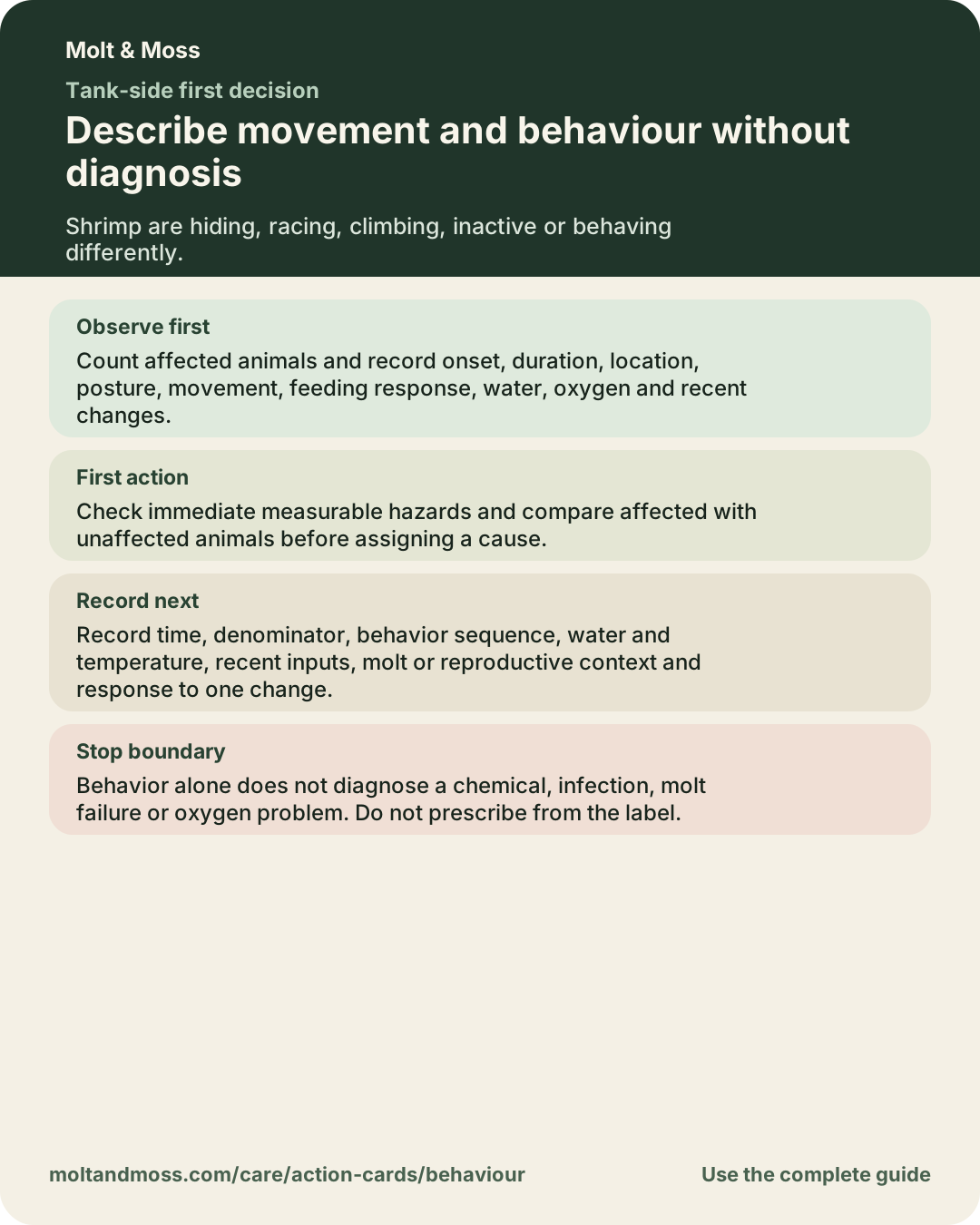
- behaviour decision card Tank-side decision card
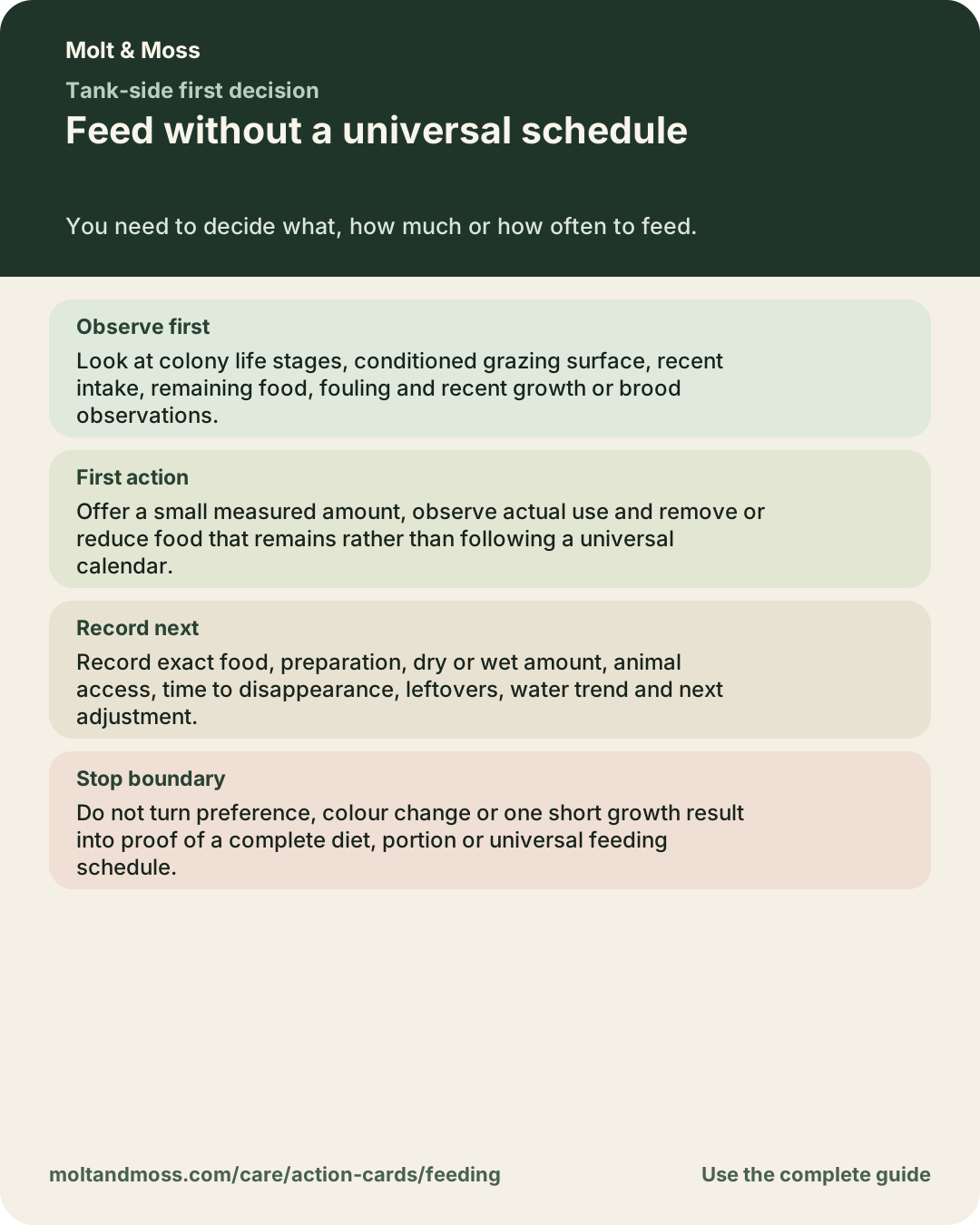
The card translates this guide into an observation, first action, next record and stopping boundary, so all four require editorial review when the source changes. - feeding decision card Tank-side decision card
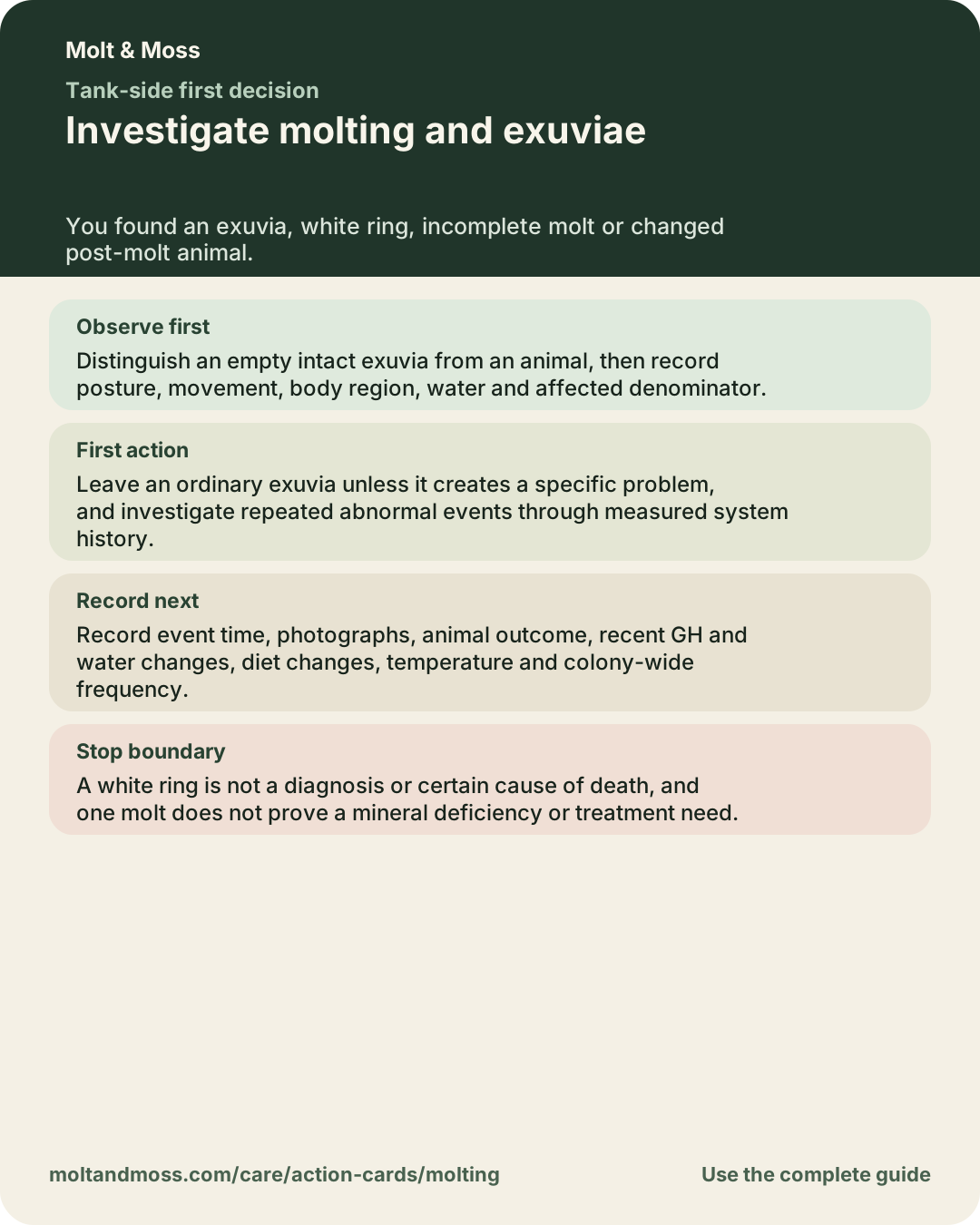
The card translates this guide into an observation, first action, next record and stopping boundary, so all four require editorial review when the source changes. - molting decision card Tank-side decision card
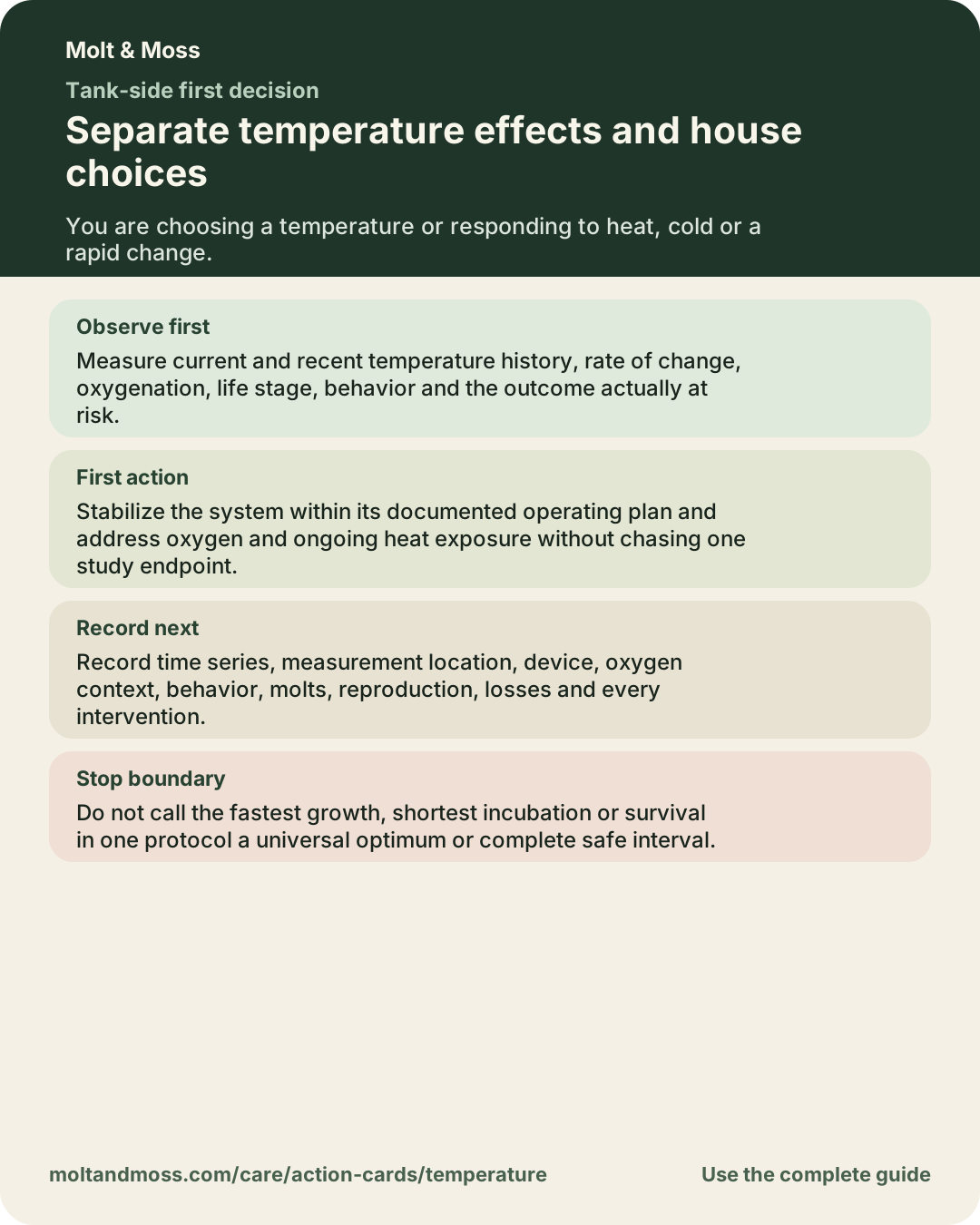
The card translates this guide into an observation, first action, next record and stopping boundary, so all four require editorial review when the source changes. - temperature decision card Tank-side decision card
The card translates this guide into an observation, first action, next record and stopping boundary, so all four require editorial review when the source changes. - behaviour practical guide Practical guide
The guide uses this evidence record and its practical wording must remain inside the revised source boundary. - feeding practical guide Practical guide
The guide uses this evidence record and its practical wording must remain inside the revised source boundary. - molting practical guide Practical guide
The guide uses this evidence record and its practical wording must remain inside the revised source boundary. - temperature practical guide Practical guide
The guide uses this evidence record and its practical wording must remain inside the revised source boundary.
Generated from governing registry (19)
This surface derives from a governing registry and should update with it, but release tests must still prove parity and routing.
- Record CSL-JSON citation Citation export
The record citation export derives its note and source metadata from the evidence registry. - Record RIS citation Citation export
The record citation export derives its note and source metadata from the evidence registry. - Complete CSL-JSON bibliography Citation export
The complete citation export includes every evidence registry record. - Complete RIS bibliography Citation export
The complete citation export includes every evidence registry record. - behaviour portable decision card Generated decision-card text
The portable text derives from the curated decision-card registry and must preserve every card section and both permanent links. - feeding portable decision card Generated decision-card text
The portable text derives from the curated decision-card registry and must preserve every card section and both permanent links. - molting portable decision card Generated decision-card text
The portable text derives from the curated decision-card registry and must preserve every card section and both permanent links. - temperature portable decision card Generated decision-card text
The portable text derives from the curated decision-card registry and must preserve every card section and both permanent links. - behaviour complete visual decision card Generated decision-card visual
The typography-only visual and exact accessibility description derive from the curated decision-card registry and must preserve every card section. - feeding complete visual decision card Generated decision-card visual
The typography-only visual and exact accessibility description derive from the curated decision-card registry and must preserve every card section. - molting complete visual decision card Generated decision-card visual
The typography-only visual and exact accessibility description derive from the curated decision-card registry and must preserve every card section. - temperature complete visual decision card Generated decision-card visual
The typography-only visual and exact accessibility description derive from the curated decision-card registry and must preserve every card section. - Transcriptome profiles of the hepatopancreas of the Chinese swamp shrimp (Neocaridina denticulata) under different diurnal rhythms Canonical evidence page
The canonical evidence page derives from the current evidence registry record. - behaviour evidence dossier Generated guide dossier
The dossier derives its linked evidence set from the record care path. - feeding evidence dossier Generated guide dossier
The dossier derives its linked evidence set from the record care path. - molting evidence dossier Generated guide dossier
The dossier derives its linked evidence set from the record care path. - temperature evidence dossier Generated guide dossier
The dossier derives its linked evidence set from the record care path. - Machine-readable knowledge export Machine-readable knowledge export
The versioned export includes the complete evidence registry and source-integrity audit. - Research map record Research map
The research map derives its source boundary from the evidence registry.
Historical record needs follow-up decision (1)
Do not silently rewrite history. Decide whether the prior change record remains accurate and publish a new correction or scope note when needed.
- Time-associated RNA does not identify a best feeding hour Historical research change
The historical change cites this source. Preserve the old decision and decide whether a new public correction is required.
How this record is classified
System observation or method study: An aquarium, analytical or biological system was observed without an assigned Neocaridina animal treatment. The species relationship still identifies whether the evidence is biological or system-adjacent.
Direct Neocaridina evidence: The source measured animals named within Neocaridina. Direct still does not mean universal or sufficient.
Topics: Anatomy, Behaviour, Feeding, Genetics, Molting, Temperature
Critically appraise this source without a score
These questions fit this record's system observation or method study role. They are prompts, not automatic judgments. Open the original source to answer them.
- Identity and provenance: How were the organism, population, stock and life stage identified and sourced? A published name or seller label can hide a taxonomic, population or life-stage transfer.
- Independent unit: What unit was independently assigned or sampled, and how many units support each comparison? Animal counts do not create independent replication when animals share a vessel, site, family or treatment history.
- Comparison and context: What was the actual comparator, allocation process, environment, duration and material condition? A result has meaning only against the comparison and conditions that produced it.
- Endpoint and measurement: Which endpoint was measured, with what method, unit, timing, resolution and decision rule? One endpoint cannot silently become survival, welfare, diagnosis, reproduction or long-term population performance.
- Denominators and missingness: Are starting counts, exclusions, losses, missing observations and analysis denominators reconciled? Unreported or changing denominators can alter the apparent direction, precision and applicability of a result.
- Transfer boundary: What is the nearest tempting aquarium claim that this source design cannot establish? Direct evidence can still be narrow, and adjacent evidence can be useful only while the inference remains visible.
- System relationship: Was the measured unit an aquarium system, analytical method, another taxon or another biological level? A system or method result is not automatically a Neocaridina animal response.
- Inference mechanism: What explicit mechanism or shared property makes the adjacent evidence relevant? Similarity must be stated and tested rather than assumed from a broad label.
- Target validation: Has the method or inference been validated in Neocaridina, the intended water, life stage and decision range? Analytical validity in one matrix or biological validity in another species may not transfer.
- Permitted use: Is the source being used only for its method or system role rather than promoted to animal evidence? Useful adjacent evidence becomes misleading when its role is silently upgraded.
Related source material
Where it is used
Reuse the reviewed citation boundary
Download CSL-JSON or download RIS. Both retain this record's support, limitation and review note.
Challenge a transcription, interpretation or missing boundary. A challenge changes the record only after editorial review.